
Welcome back, my fellow creatives!
Last week I shared my struggle with names as I plot’n’plan for my new novel. Unlike my previous series, this one won’t dwell much on Earth or its hidden spaces. I want us to ride off-world to new lands…new, yet familiar.
There are those who feel that science fiction should be a mirror to our present, and others feel scifi should be a guide to what we aspire to be. No matter how you feel about science fiction, the inherent danger–at least, from the perspective of one who enjoys writing fantasy–is writing a “dated” story. Frankly, this kind of danger exists for middle-grade and Young Adult writers as well, as the “hip” language of youth can change from generation to generation.

(For the record, I refuse to say something is “sick” or “fire.”
I refuse to call someone “Bruh.” I will say “that tracks” on occasion.)
But I was talking about the new worlds.
As one weaves a new world in the imagination, one is going to gather threads from what they have. The threads they find curious, beautiful, and unique. It’s rather like making a film, in a way. One may find a place that is suitable for filming and turn it into a set, or one may build a set from scratch. Even then, they’ve got to use the materials available to them and plan out how those materials are used. You cannot create with nothing.

The more I work out the rules and materials of the worlds Elmore and Johnny encounter, I cannot help but think of the science fiction I watched as a youth: Star Wars, of course, and Star Trek. Being a Cold War kid, the parallel of Klingons and the Federation wasn’t lost on me then or now. But the worldbuilding could take some bizarre turns with the original series of the 60s because of budget constraints. Oh, look! Kirk’s on a wild west-ish planet! Oh, look! Spock has to dress like a gangster! Oh, look! There’s a person in a giant rabbit costume talking to McCoy!
Sure, it got weird, because they used the materials they had to build a story. Those folks had drywall, lightbulbs, spray paint, and a dream to build a planet, dammit, so they did!
(Yes, that’s my awkward transition towards into another series that enjoyed bending space and time as one adventured with a certain Doctor Who’s name is lost on me at the moment. 🙂)
Eh? See what I did there?
I’ll show myself out, lol.
Curious thing about these early brainstorming stages, isn’t it? We have The Idea. We see our heroes and villains take shape from light and shadow, their conflict rooted deep in Love, in Purpose. As we take those shapes to give them depth, we find hidden treasures from past loves, buried so long in our subconscious we forgot just how important they were until we see they form the innards of this, our New Creations.
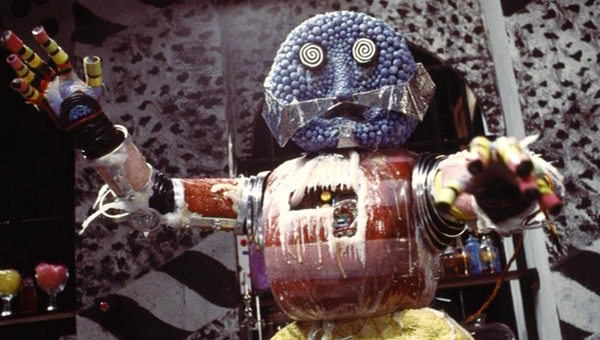
As I map out my Star Lines, this Hero’s Journey my twin protagonists must take, I recall the ever-bizarre twists and turns that the Enterprise or Tardis would take through the cosmos, Kirk’s crew and the Doctor always losing themselves in space. The old-school Dr. Who was particularly short on budget, so other planets often consisted of rock quarries or lots of PVC piping in big black rooms or those monsters made of carpet, cellophane, and Christmas lights. And I don’t say this to tease the old-school Dr. Who–though I did plenty of that with my dad back in the 80s. I say this because the imagination and the story transformed those Christmas lights and rock quarries into new entirely new places all thanks to good storytelling.

Besides, I had my own guilty pleasure of a scifi show back then: Silverhawks.
So you have these army folks whose bodies are converted into “partly metal, partly real” creations of strength, flight, and speed. (Oh, and lasers. Can’t forget those good ol’ 80s lasers) There’s air in space for breathing over there because… reasons…and wind currents because…reasons…and you can fall through space because…reasons…
But to my kid brain, it was perfect.
Look at those people flying through asteroid fields and battling the bad guys! And the rogue’s gallery for that show was as absurd as the Adam West 60s Batman show. You had a shapeshifter, a gigantic bull that can’t talk, a robot gambling machine, a dude who controls lightning storms with a frickin’ tuning fork, and even music lasers. You heard me: MUSIC LASERS. The power of rock kicks space-butt!

And as wack-a-doodle as this all sounds to launch us off-planet, these stories don’t abandon us in the utterly unknown. There are bits and pieces we can latch onto, those moments of grounding the audience by using something familiar. Maybe it’s a spaceship that looks like a car. Maybe it’s a planet where everyone has to live underwater in structures that look like our shopping malls. That’s okay! If the story is strong, those familiar visuals are just like the reader using their mind’s eye to fill in setting detail gaps as your plot unfolds. We as writers shouldn’t be afraid of focusing on the story essentials. Even a worldbuilding master like Tolkien didn’t reinvent how beer is made or how forges work. He applied some familiar elements to the societies he built, and those familiarities helped make Middle Earth all the more accessible.
But maybe those shows from the past aren’t quite the best source of inspiration for you. That’s fine. Let’s think about other pasts, then. Perhaps a piece of proper history will do the trick. Let’s take a look at that next week. 🙂
Until then, is there a bit of older science fiction that will always hold a place in your heart? I’d love to hear about it!
Read on, share on, and write on, my friends!

 Jean Lee's World
As ever, a fine blog. Being a long in the tooth nutter, I’ve always thought that the best science fiction is that of the impossible, yet believably. But to make that work for me the subject of ‘time’ needed not to be always based on the ‘future’. Most humans see science fiction as if based only on an imagined future scientific or technological advances. How dull when one can be imaginative in bygone days that never existed in any form of reality, let alone be creatures of memory that has long since penned to mankind the story of their lives. Picture nothing, nothing at all, I think as where to start writing when it comes to said science fiction. But that’s me, and as you know, I’m really am the nutter I claim to be. All the best, Mike
LikeLiked by 1 person
Yes, my friend, exactly! I think that’s why I dig the steampunk approach–the speculation of how a world can progress when technology takes a different turn in a much older period of history. x
LikeLiked by 1 person
Really enjoyed this. I love Sci-fi that feels like it could happen, it’s feels like it’s based on a possible reality. Sometimes it just feels too remote, too artificial.
LikeLiked by 1 person
Yes, very true! That was a big complaint when those rebooted STAR TREK movies came out–everything was so much cleaner and advanced looking compared to the show. Sure, our ideas about technology changed from the 60s, but the futurish technology in the newer movies looks impossible to achieve.
LikeLike
Once in a writing magazine (either Poets & Writers or Writer’s Digest), when it was discussing differences between genres and their subgenres, I remember it stating that science fiction is potentially real while fantasy isn’t.
LikeLiked by 1 person
That sounds like something Writer’s Digest would say, lol. And it’s not a bad approach, true, since science fiction certainly inspires many to *make* that technology real. I still remember when smart phones became a thing, all I could think of were the triquorder (tricorder? however that’s spelled) from Star Trek: The Next Generation.
LikeLiked by 1 person
I certainly hope to try my hand at science fiction someday.
LikeLiked by 1 person
As you should! 🙂
LikeLiked by 1 person
🙂
LikeLiked by 1 person
We’re living with aspects of science fiction written about in the past.
LikeLiked by 1 person
We really are!
LikeLiked by 1 person
I’ve always liked the old stuff, particularly Doctor Who(s) and Star Trek. Who wouldn’t?
LikeLiked by 1 person
I know! There’s a definite charm to those that a bunch of green screen cgi whatnot can never attain.
LikeLiked by 1 person
I’m in awe of how you unpack all this stuff, Jean. A true teacher. Also, all this talk about sci-fi. Has anyone else noticed that just about everything they talked about in the original Star Trek has come to pass? Well, not healing with light and sound yet, or the beam me up part, but so much more. So sci-fi isn’t really that far-fetched, eh? Just some people with better imaginations than others. ;0)
LikeLiked by 1 person
Or the “we don’t use currency any more” life in the Next Generation tv series of Star Trek…wouldn’t that be nice! But yeah, a lot of the old-school imaginations saw the possibilities there…or maybe it was those initial imaginations that spurred the next imaginations to make it a reality. An old story tied to James Doohan: a young woman either wrote him or met him and a conference and told him how his character Scotty inspired her to study engineering and work in space technology. He said that was the best achievement his acting could have achieved. The right kind of scifi is like a catalyst that helps the next generation of minds turn dreams into reality! xxxxxxxxx
LikeLiked by 1 person
That’s what I hope to do with my writing ✍️ for the environment. 🤞
LikeLiked by 1 person
Good blog Jean Lee. It has lessons to be learned,
LikeLiked by 1 person
Many thanks, my friend!
LikeLike
Hi. Have sci-fi and fantasy always been your favorite genres to watch/read/write about?
LikeLiked by 1 person
You know, it’s curious…growing up, I always *watched* scifi/fantasy with my family, but I *read* cozy mysteries and the occasional fantasy. I was reading Colin Dexter, PD James, and the like way before the likes of Tolkien. Now that I think about it, it’s like I read the Chronicles of Narnia and subconsciously went “NOPE” at reading any other fantasy for a long time. Strange how our imaginations gravitate towards certain things depending on how they are presented! xxxx
LikeLiked by 1 person
[…] ← Previous […]
LikeLike