
Welcome back, my fellow creatives!
Last week I dove into the cheap scifi that inspires because it utilizes bits of the familiar to build a new world. This week my family and I went out into the world to see what bits of the familiar could inspire…um…

Okay, we just wanted to escape computers for a day.
My family took a drive to Kenosha, a lovely city on Lake Michigan near the Wisconsin/Illinois border. We walked along the lakefront from one small museum to another, exploring dinosaur bones, AMC cars, and lighthouse artifacts.
While Bo marveled at the motors used in different films, Blondie admired the dinosaur fossils, and the twins mucked about with a recreation of a Civil War cannon, I studied a lens.
One of the glorious things I love about steampunk is the way a writer can thread history through the present to create something new. I saw this lens, and knew it held a place among the Star Lines. Just look at all those prisms, how this single glass structure could amplify light for miles through the darkness. It reminded me of Vandermeer’s Area X trilogy, an eco-apocalyptic series about the alien force reforming a portion of American landscape with new creatures, new plants…and new versions of “humanity.”
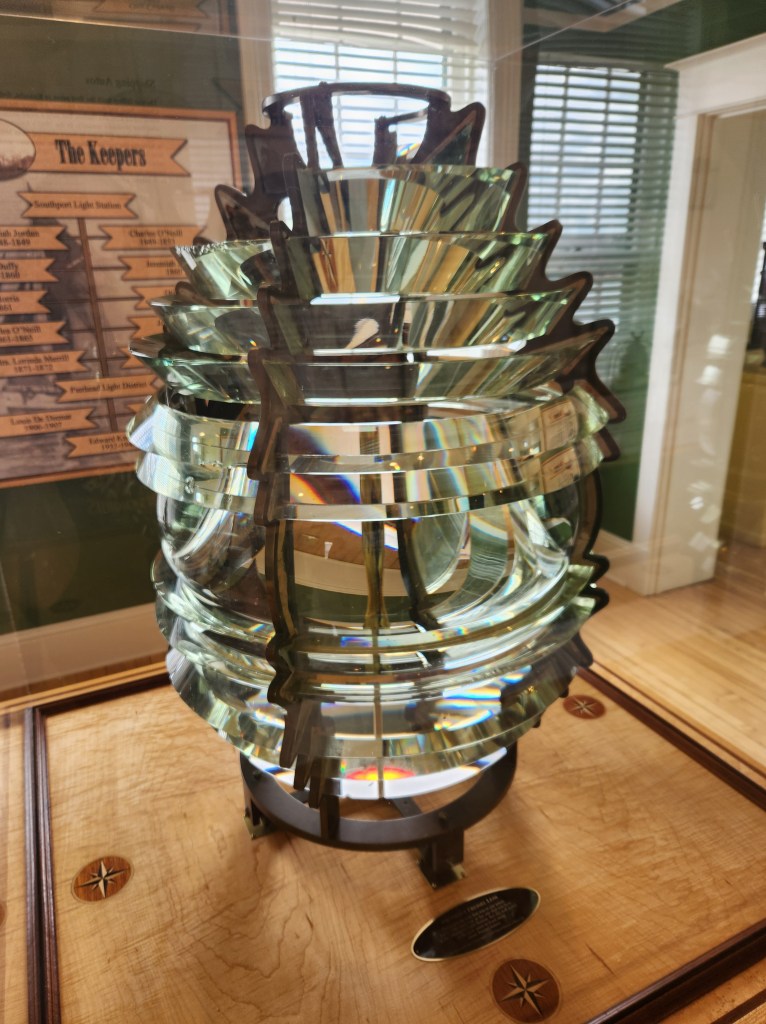
Without dropping too much of the plot, the third book (Acceptance) helps us learn how the alien life force got to our planet: it was trapped in the glass of the lighthouse lens. Before you go pfft that’s weird, keep in mind that a lightning strike on a beach can lead to the creation of glass. Vandermeer doesn’t spell it out for us, but we as readers can infer that The Thing was in the glass of the lens until someone cracked the lens and let it out. The lighthouse keeper is the first to see it outside:
Only to see something glittering from the lawn–half hidden by a plant rising from a tuft of weeds near where he’d found a dead squirrel a couple of days ago. Glass? A key? The dark green leaves formed a rough circle, obscuring whatever lay at its base. He knelt, shielded his gaze, but the glinting thing was still hidden by the leaves of the plant, or was it part of a leaf? Whatever it was, it was delicate beyond measure, yet perversely reminded him of the four-ton lens far above his head.
The lens of the story is made of a HUGE series of prisms not unlike the image you see here. I can’t help but study that lens and wonder how else I can use its shape, its make-up, to create another other-worldly power.
Another piece of history I’m eager to work with is a theme I feel many of us can understand: the decay of the small town.
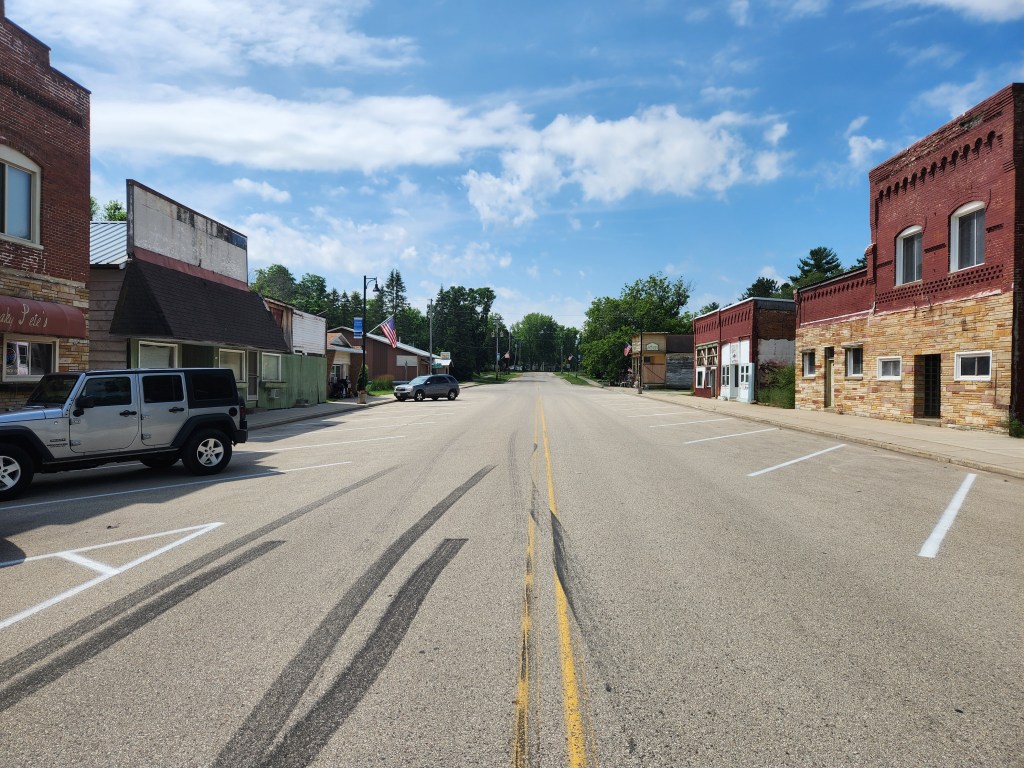
This is one of many small towns in the North Woods. Blink and you miss it. With a population of 400 or less, Hancock maintains a dying grasp on an intersection of county highways. One can stand and see a couple of bars, the library. A dead gas station, the post office. There’s a motel around the corner, and an attempt at an antique store. That’s it.
Yet, thanks to a trip into the town’s history (thanks to an amazing librarian), I was able to see just how alive this town was 100+ years ago.
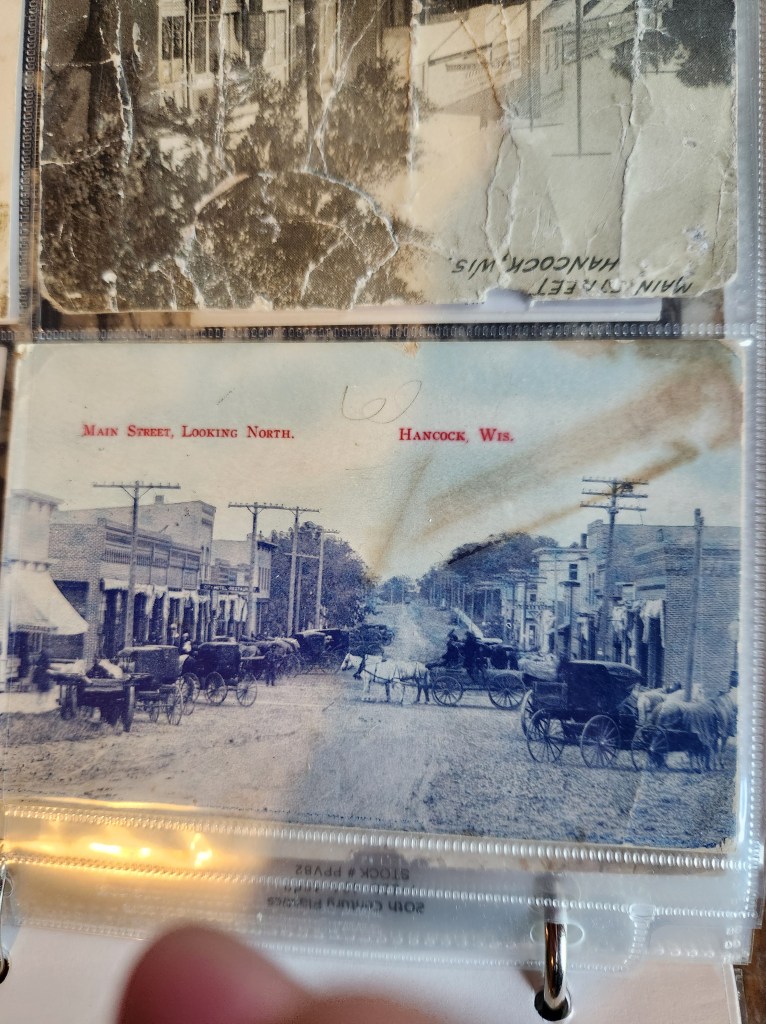
Main street bustled with carriages, sleighs, cars. This town had a theater! Bo saw with surprise.
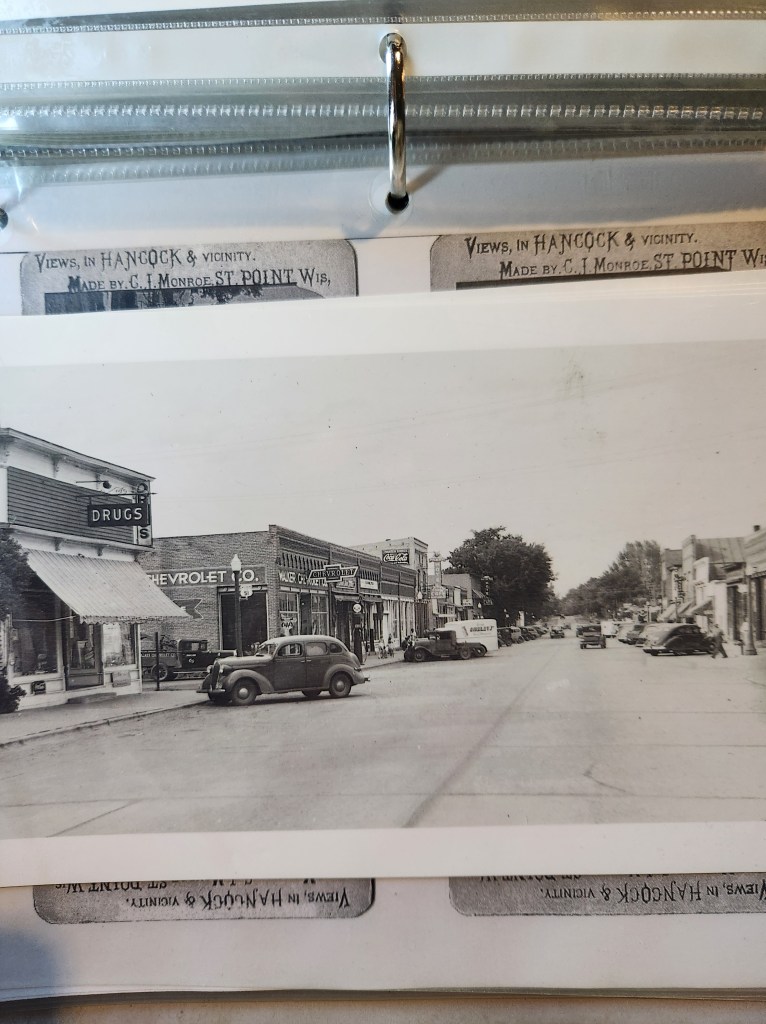
The newspaper brimmed with local events, news about the school and churches (plural!), farming updates, and say, we’ve got a new President, and there was this boat named the Titanic that sunk a week ago… It was a town that took care of itself. A town that thrived in the wilderness thanks to local ranchers and farmers and the occasional campers. A town that noted other small towns nearby, but the wide world was out of sight, and therefore out of mind.
Then came the fires.
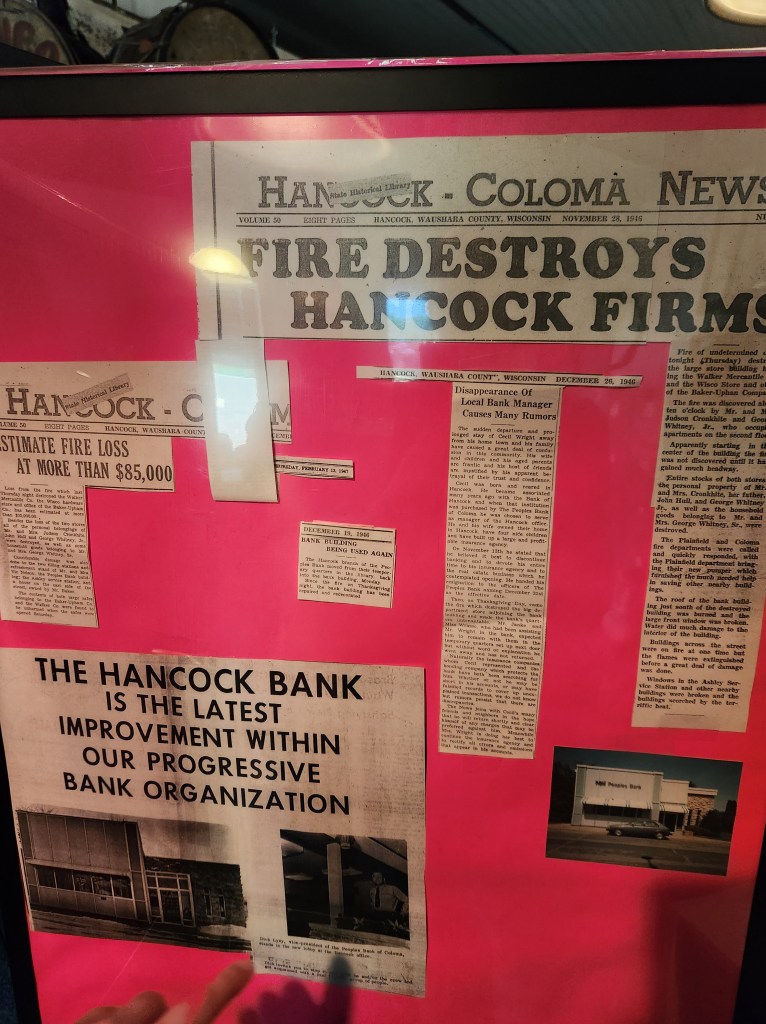
Blondie noticed the headlines first. Over the period of a few years, multiple fires struck major buildings in the area. Yes, with casualties.
The town determined to move forward, yet…it was slower somehow. Yes, they advertised new resorts in the area. Supper clubs for socializing and such.
But by the 1960s, something felt different in the town’s news. There seemed to be less to say, less to show. Was it the Interstate, maybe? Did Hancock befall the same fate as Radiator Springs in Pixar’s Cars?
Highly possible. But it’s towns like this that drive my imagination to wander. Happiness was abundant here. Now, perhaps one finds it among the nooks and crannies of those still farming the land, still watching the sunset upon its lake, still tending the bar for the craggled, time-beaten patrons drinking their Miller Lite as they hash over this year’s harvest, last year’s storm, the glory days of summer parades and high school championships. When any society abandons its rural life, that life will shrivel in upon itself.
That life needs hope.
And hope, I feel, is something one seeks no matter where one is in time or space.
For more on my explorations into Wisconsin’s past, check out these posts:
- #WriterProblems: Finding #Worldbuilding #Inspiration in #SmallTownLife
- The #Writing #Inspiration Found in Local Lore
- #writers, what #writinginspiration can be found in your #homestate? In #Wisconsin, one #setting to spark your #storytelling is #theHouseontheRock.
- The Tale of the Prophets’ Massacre: An Excerpt from Night’s Tooth, Coming Late August 2019
Next week I should return to finding my footing as far as the podcast goes. I’ve had a long break from it. You’ve had a long break from it. And it’s time to reflect on whether or not it’s worth ending that break.
Read on, share on, and write on, my friends!

 Jean Lee's World
I’ve travelled a lot in Wisconsin, but never visited Hancock. Thanks for the introduction.
LikeLiked by 2 people
You are quite welcome! I wish I could say this is a rare place, but too many small towns in Wisconsin look like this. 😦
LikeLike
Checking out these links. I hope to take some forays into Wisconsin while I’m in the general vicinity!
LikeLiked by 1 person
Oh boy! I do hope you enjoy it! xxxxx
LikeLiked by 1 person
We have mining villages that became lost when the pits closed, ghost like. Really thriving then suddenly it all went. Some of the places never recover yet people are still stuck there. This looks a wonderful place to visit. I bet there are so many stories you could get from time there. xxxxx
LikeLiked by 1 person
I bet I could! As you say, there are towns that had their livelihood, but once the livelihood changed the town didn’t know what to do. It’s heartbreaking. xxxxxxx
LikeLike
[…] detail about “great possibilities” imagined for a place only for them to fall through. After all, I even wrote about such a town a couple posts back. There is little to keep people there, even less to draw people […]
LikeLiked by 1 person