Reading literature remains the surest means to do just that…the examined life. After all, literature may simply be the creative expression of metaphysics and being: In some mysterious way, each life is every life, and all lives are one life—there is something of ourselves in each and every character we meet in the hallowed pages of a Great Book.
–David Wright, “Why Read Literature?”
Welcome back, my fellow creatives!
After a grueling conference where I presented on research aids I’ve been developing for the undergraduates, I began planning for–you guessed it–another conference. Thankfully, it’s my university’s literary festival, where we share literary reflections, host workshops, and celebrate our shared joy of reading and writing. I chose to focus on the use of poisons (oh boy!) in Miss Marple short stories. I pulled my collection off the Christie bookcase, started reading, and smiled. Sighed.
And then it hit me.
I was relieved to read for fun.
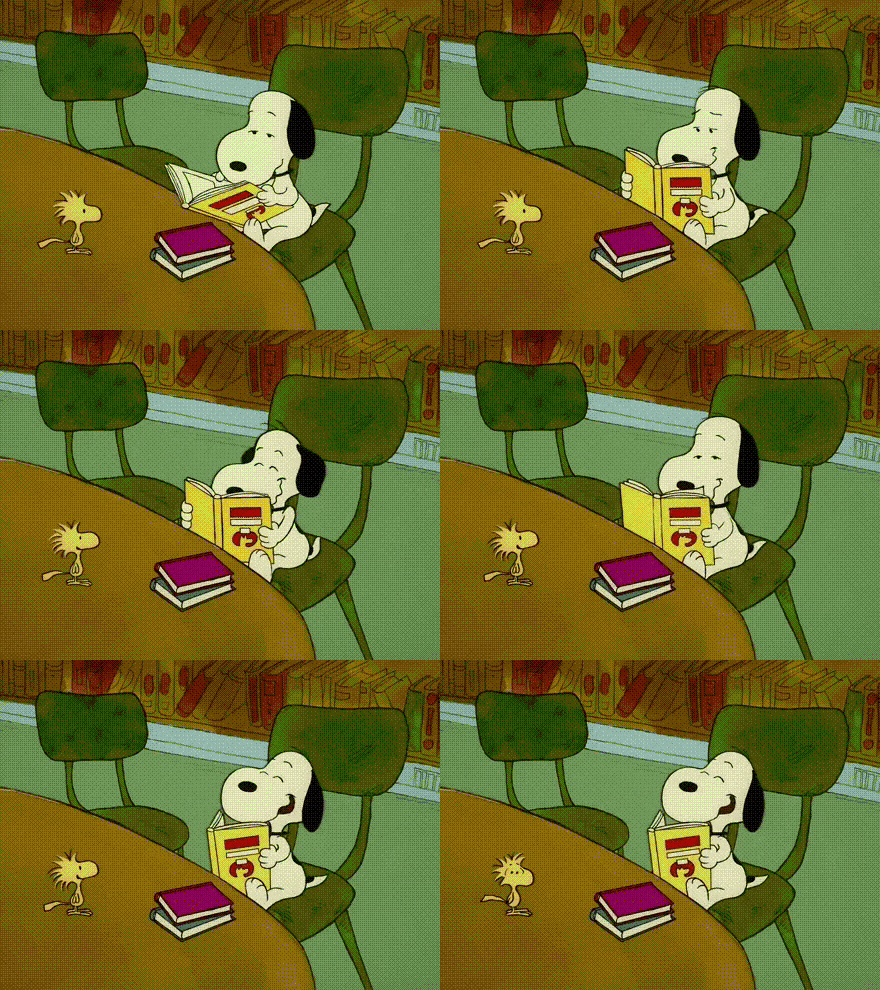
Even if I wasn’t presenting on these stories, I’d still read them because I wanted to. I liked them.
After digging through piles of academic texts and student essays, the act of reading for fun almost felt like cheating. Like it wasn’t allowed because it wasn’t work.
Let’s face it: don’t we all have those moments as writers? The obligation to read up on the competition, or to study craft books, or to dig into texts for worldbuilding. On the one hand, we’re doing it for the storytelling we love. We need to do it.
Which is the point: we must read these things because we’re authors. It’s not just for fun.
Perhaps for you, it’s all one and the same. Excellent! I tip my hat to you and wish you happy reading.
For those of us with lots of professional reading and writing on our daily itineraries, however, it can be a genuine challenge to allow oneself to read for fun. There’s this inner guilt that you are not using that time to pay the bills. If I read, I shooooould be reading as an Author, thus every story I read must be for my work.

That four-letter word adds weight where there wasn’t before. We feel it on our minds as we critique every line to see what Author So-and-So did, what makes Such-and-Such Trope so trendy, how that tidbit about trains could work in outer space (just me?). Plus there are the pressures to read what those big-time publishers and reviewers say are “worthy” to be read, that are, to them, “challenging” or “important.”
Should one read what challenges them? There’s certainly merit to it. I’m glad I read Orwell’s Animal Farm as a teen, which my daughter also read in the last year. It makes you think. It stays with you. But it sure ain’t what I’d call fun.
Challenging stories are worth the work if that is what you wish to do: challenge your horizons. I read The Count of Monte Cristo when my kids were tiny because a friend challenged me to read it. I did NOT take notes. I did NOT critique the craft. I simply read it to lose myself in the story.
And it was a pleasure.
Reading is the sole means by which we slip, involuntarily, often helplessly, into another’s skin, another’s voice, another’s soul.
— Joyce Carol Oates
Can challenges lead to something fun? Of course! Last summer, I challenged Blondie to try some stories that didn’t involve dragons, much to her chagrin. While she didn’t care much for Agatha Christie or Diana Wynne Jones (yes, she’s still my kid), she did enjoy Douglas Adams, Richard Osman, and Terry Pratchett, especially Pratchett. (Seriously, that kid would burst in while I’m working to read passages to me. SHE NEVER DOES THAT.)
Likewise, reading for fun can lead to learning something new. I didn’t pick up the Jack Reacher series to study Lee Child’s writing: I picked it up because I miss old-school mystery and action schlock. I was not planning to read for work. I simply learned a thing or two about setting, pacing, and effective shifts in pov while reading for fun.
Maybe that’s what I want to say here.
Reading for fun matters.
It expands our horizons, our vocabulary, our connection with humanity.
It unlocks our imagination and our inner workings.
It inspires others around us to read for fun.
It guides those who struggle to understand the world.
It empowers the mind and soul.
It breathes life into us when we feel lifeless.
It is worthy of us, always.
Reading is everything. Reading makes me feel like I’ve accomplished something, learned something, become a better person. Reading makes me smarter. Reading gives me something to talk about later on. Reading is the unbelievably healthy way my attention deficit disorder medicates itself. Reading is escape, and the opposite of escape; it’s a way to make contact with reality after a day of making things up, and it’s a way of making contact with someone else’s imagination after a day that’s all too real. Reading is grist. Reading is bliss.
— Nora Ephron
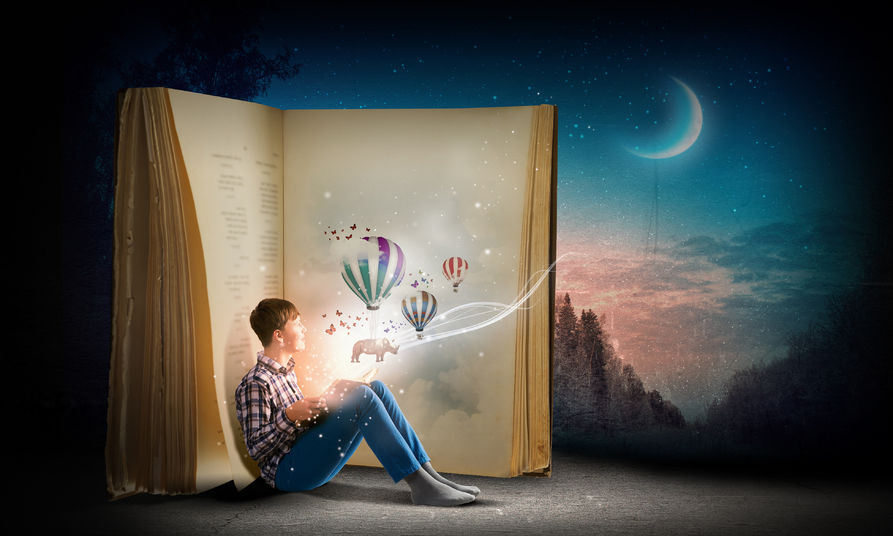
Coming up, I’ve got another lovely author interview, a writing resource spotlight, and why boys need stories, too.
Read on, share on, and write on, my friends!
 Jean Lee's World
You make a great point about reading for fun and as a challenge. If more of us took that approach rather than seeing it as a chore, especially in school, it would be more enjoyable and more common.
LikeLiked by 1 person
Exactly, Andrew! I know my daughter wouldn’t have chosen Orwell of her own accord, but if we invited kids to read a lot for fun with *some* required stuff, I think there’d be a lot less pushback when it comes to trying the classics. xxxxx
LikeLiked by 1 person
Luckily most of my reading is for fun. And I’m willing to stop reading a book that isn’t holding my interest.
LikeLiked by 1 person
Oh yes, Peggy, that’s an important point, too. There are millions of stories to be read. We shouldn’t feel like we HAVE to read something that we don’t enjoy. xxxxxx
LikeLiked by 1 person
You are right. Reading should be enjoyable. Sometimes, a person just needs a break from the world, and reading a book is a great way to do that.
LikeLiked by 1 person
Yes, Diana, exactly! We have to remind ourselves that it’s okay to read for that fun escape. xxxxx
LikeLiked by 1 person
‘Reading is bliss.‘ – Oh yes… definitely!!
LikeLiked by 1 person
Yes yes yes!!! xxxxxx
LikeLiked by 1 person
Sorry that I missed this one yesterday! Whatever, you work was fine as ever. Sorry again Mike
LikeLiked by 1 person
No worries, my friend, for I have SERIOUS catching up to do with you and many others. xxxxx
LikeLiked by 1 person
Great ideas—-s from another reader
LikeLiked by 1 person
Many thanks, my friend! I hope you’re well xxxxx
LikeLiked by 1 person
Reading is bliss. It’s so important for happiness and wellbeing. xxxxx
LikeLike
HI. I did more than enough academic reading in my younger days. Since then, the bulk of my reading has been for fun!
LikeLike