Welcome back, my fellow creatives!
Starting anything is hard, especially a story.
A blank piece of paper is God’s way of telling us how hard it is to be God. — Sidney Sheldon
It doesn’t help that my podcast fixates on story beginnings. Well, it does help in that I study what works and what doesn’t as far as first chapters or those infamous prologues go. But in reading different books month after month, it’s easy to forget that I’m reading someone’s final draft while I’m working on my first. These two things should NOT be like the other.
The first draft of your novel will likely not look like a book you pick up off the shelf of a store or a library, and why should it? Published novels have little to teach you about how books are written; they tell us only what novels can do once fixed in their final form. (Bell, 76)
That’s why I’m happy to recommend Matt Bell’s Refuse to Be Done: How to Write and Rewrite a Novel in Three Drafts.

When a writer is more than a writer in life (and let’s face it, we all are), we must make every minute count. And if you’re a Luddite like me, the thought of using AI to “help” your creativity is utterly repulsive. (Yes, I get that’s a debate for a different day.)
But we writers can be our own worst enemies. We’ll sit and stare at a sentence for ages. We’ll spend weeks building a new character into our novel only to spend another few weeks taking that character out again. (Ye gods, was that a saga!) We want to be productive and efficient.
“Start writing, no matter what. The water does not flow until the faucet is turned on.” — Louis L’Amour
But is creativity really so like a spigot? I’d say not. But L’Amour has a point: nothing’s going to get written if one doesn’t start.
Bell provides some terrific encouragement and advice to help with the first draft, such as widening the margins from 1″ to 2″ on the WIP. It’s a morale boost to see a page fill so quickly, but the page also looks like the page of a novel, which always makes me smile. Plus, if/when one prints out the draft to edit it, there’s a healthy amount of page space for annotations. Win-win! And I admit, I’m enjoying this morale boost on my WIP, so I heartily recommend giving this a try.
Another strategy Bell suggests is “Writing the Islands.”
If you ever find yourself unsure of what comes next, try what Charlie Smith calls “writing the islands”: instead of writing scene after scene in order (and then and then and then), write the big scenes you already know, no matter how far off they seem. Once those scenes exist on teh page, the task then becomes writing between these known destinations, creating bridges to connect these islands. The islands will need to be revised by the time you arrive at them again, once you know what else happens, but you’re going to revise everything anyway. Don’t let not knowing exactly what goes into a scene keep you from writing it. (Bell, 20)
When I tried my dictation experiment for drafting (see my article in Story Empire for that), I put Bell’s idea to use. And wouldn’t you know, it was much easier verbally exploring the scenes I could already see clearly in my imagination. If you’re struggling to start your first draft because you can’t imagine the beginning, why start there? Rather, begin where your imagination places you. You may find as I did that the proper beginning will reveal itself in time.
I also dug Bell’s recommendation to read outside one’s genre. Now I’ve done this for much of my reading life, as I often read mystery but write fantasy. But Bell’s logic for reading beyond one’s genre makes a lot of sense:
Switch up your intake: a change in genre will bring with it different tactics and craft techniques, additional solutions to narrative problems and alternative story structures. You want as many possibilities floating around you as possible, especially in the earliest and wildest stages of your draft. (Bell, 29)
And I’d say this counts for what one views, too. I recently watched The Outlaw Josey Wales with Bo, and an answer to a scifi-shaped plot hole fell right into my lap.
Imbibing different media on different aspects of a world can help us find shape where all was fog. Architecture books, history books, fashion books, vernacular books, western movies, game shows, documentaries–they can all come together to help create a world.
The bigger you make your art life, the more possibilities your imagination will generate. (Bell, 28)
All that research plays into helping one through the second draft, too. Bell shares several tips for that stage where all seems stuck and there’s no path forward. Whether it’s changing up the p.o.v., mapping the plotlines to find the true course, exploring one’s “incomprehensible abundance,” the goal is to always move that story forward. Only when that second draft has been charted and written should one even consider mucking about with some form of line-editing in the third draft.
Your ear will hear what your eyes won’t see. (Bell, 99)
This quote made me smile. I say this EVERY term to my students. It’s an uphill battle encouraging self-editing in a world of free Grammarly, but I’ll die on this hill of reading out loud. For all the garbage an early draft carries, finding those gems of powerful language and compelling rhythm makes it all worthwhile. And one won’t know those gems exist unless they read aloud. Other strategies are also highlighted, like those infamous “weasel words.” Now I don’t entirely agree with Bell that words like “grin” and “watch” are lame, but I also get how easily those kinds of words can be overused. Perhaps “weasel words” isn’t the right term here–think “crutch words.” They’re the words we fall back on because they’re there, they’re handy, we don’t have to worry about what they mean and we know readers will know what they mean, so in they go!
We must strive for better, for our readers deserve better.
Tightening prose is always a challenge for me, too. I’ve tried his “pull up your widows” challenge before, and loathed the results.
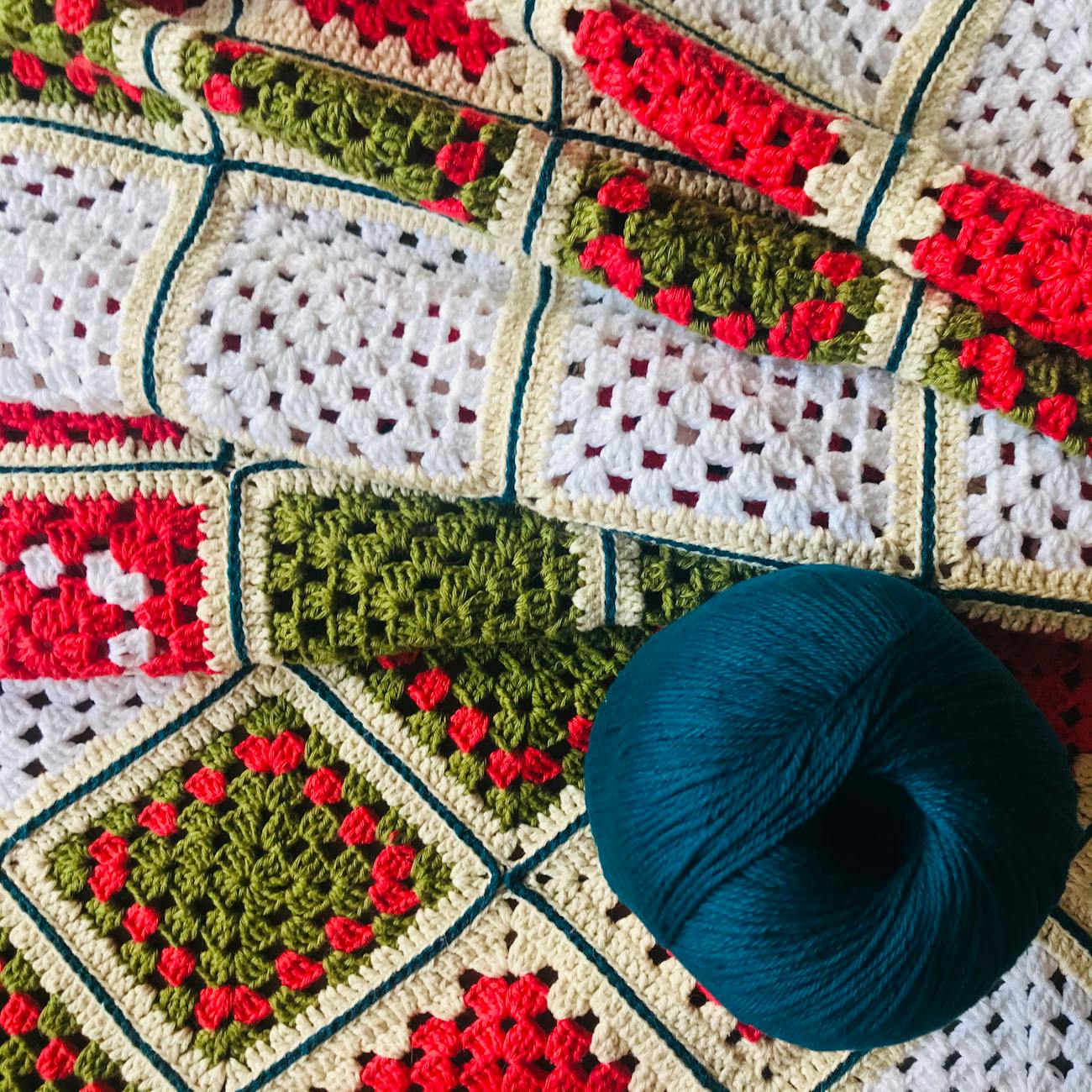
Yet I can’t help but appreciate its goal: removing the one or three words dangling at the end of a paragraph. They remind me of those yarn bits I have whenever I change color on a blanket because I’ve never gotten the knack of weaving in the ends of the yarn. Those bits don’t have to stay there. With some extra work, one can trim and weave, trim and weave, and create something tighter and cleaner as a result.
And all that work will, one day, come to an end.
One day, the novel you set out to write will be done, and nothing else you do will ever undo that doneness. (Bell, 149)
Until then, refuse to be done.
Coming up, I’ve got more indie author interviews and adventures in the empire, not to mention some grit’n’glamour with cult-classicy music. Stay tuned!
Read on, share on, and write on, my friends!
 Jean Lee's World
⭐️⭐️⭐️⭐️⭐️
LikeLiked by 1 person
Many thanks!
LikeLiked by 1 person
Hi Jean and thank you! Wishing you a wonderful weekend…😊⭐️🎶⭐️😊
LikeLike
All was a fine blog. Regards, Mike
LikeLiked by 1 person
And always a joy to see you, my friend! xxxxx
LikeLike
Matt Bell’s theory and book are intriguing, Jean. Thanks so much for sharing. I will check it out.
LikeLiked by 2 people
I hope you enjoy it!
LikeLike
I’ve written scenes out of order when they come to me. I’ve described as like assembling a jigsaw puzzle (or even Frankenstein’s monster).
LikeLiked by 2 people
A monster is definitely what it feels like some days. Thanks for sharing!
LikeLiked by 1 person
You’re welcome, Jean.
LikeLike
Thanks for sharing. The idea of writing out of order is interesting!
LikeLiked by 1 person
I recommend giving it a try!
LikeLiked by 1 person
Thanks. I’ve done a lot of staring at sentences.
LikeLiked by 1 person
Goodness knows I’ve done so, too–both mine and my students’, lol. xxxx
LikeLiked by 1 person
Thank you Jean Lee for the helpful information.
LikeLiked by 1 person
And I thank you for stopping by!
LikeLike
Hmmmm, interesting, and useful too.
LikeLiked by 1 person
I hope you dig it!
LikeLiked by 1 person
Thanks for sharing this, Jean!
And for sharing your opinion on AI. Love this:
“the thought of using AI to “help” your creativity is utterly repulsive”
J
LikeLiked by 1 person
LOL Yeah, I ain’t a fan 🙂
LikeLiked by 1 person
can’t remember which author said this in an interview I watched, but the advice they gave was to write the ending first and work backwards from there. Only problem was too often a horror ending became bolted onto something like a rom com or children’s novel. Thank you for making the think about writing, it’s such a wonderful art form xxxxxx
LikeLike
I think I heard this about mystery writing, which makes a lot of sense to me. How can one craft the clues for a mystery if one doesn’t know where those clues need to go? I’m all for organic writing fun, but pointless red herrings and dead ends do no one any good. Blech!
LikeLike