Welcome back, my fellow creatives!
I must say, it’s really interesting gathering a mix of old and new writing resources from the library to find what’s still relevant. Since I recently completed one of those Google Certificate programs on digital marketing, I thought it might be neat to see what books on platform-building would be worth watching for in your own local library.
~*~
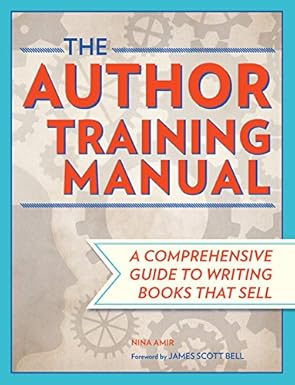
By Nina Amir
2014.
Writer’s Digest Books.
Blurb Snippet: If you want to write a book that’s going to sell to both publishers and readers, you need to know how to produce a marketable work and help it become successful. It starts the moment you have an idea. That’s when you begin thinking about the first elements of the business plan that will make your project the best it can be.
The reality is that you don’t want to spend time and energy writing a book that will never get read. The way to avoid that is to create a business plan for your book, and evaluate it (and yourself) through the same lens that an agent or acquisitions editor would. The Author Training Manual will show you how to get more creative and start looking at your work with those high standards in mind.
I admit that I was ready to turn up my nose at this book. It’s ten years old, after all, so any points it has about online publishing or marketing are surely outdated. Yet I saw several very sound points that corroborated what I had learned through Google only a few months ago: studying one’s market, noting the sales of comparable/competitive titles, etc. Amir also brings up how to create, essentially, the book version of a “cinematic universe.” Can you create little articles based upon excerpts in your book? Can you teach/present something in connection with your book? What sequels or offshoots are possible? While she wrote this with a nonfiction focus, I could quickly see the relevance for fiction writers, too.
Is this useful to a fiction writer in 2025? While some of the “author training” is clearly tailored for nonfiction writers, and yes, some of its information about social media is outdated, the majority of ideas in here can still be applied to the needs of aspiring fiction writers today.
~*~

How to Promote Your Book: a Practical Guide to Publicizing Your Own Title
By Dr. Jan Yager
2023.
Square One Publishers.
Blurb Snippet: Whether your book is being released through a commercial publisher or an academic press, or you are self-publishing it, as the author, you can and should play a crucial role in getting your title seen, talked about, and sold. And while you may watch dozens of authors pitch their books on TV, in social media, and in bookstores, they represent only a fraction of the writers who come out with new books each year. What do they know that you don’t? They know what to do to get attention for themselves and, more important, for their books―and as you will discover in book publishing veteran Jan Yager’s How to Promote Your Book, you can, too.
So this was a surprise find in the library. I was going to pick up a Writer’s Market from 2010, and here was this little beauty. Surely something so recent would be full of sage advice, right? Plus, it’s from someone who’s gone through her own self-promotion process. Experience! Yay!
And there is a lot of experience shared here. Yager breaks down the importance of having a timeline for promotion before, during, and after release. There are samples of blurb requests, author bio, media kit staples, and so on. But there are also moments where she notes how handy it is to hire a publicist or distribution service. While novel for those with funds, others like myself don’t have that kind of budget, thank you very much.
Is this useful to a fiction writer in 2025? If you have money to spend on your self-publishing adventure, Yager’s book should be a terrific fit for you. I also appreciate Yager’s breakdown of online marketing strategies. It just feels like there is more advice here for those with money for marketing than those without.
~*~

Editors on Editing: what writers need to know about what editors do
Edited by Gerald Gross
1993.
Grove Press.
Blurb Snippet: Since 1962 Editors on Editing has been an indispensable guide for editors, would-be editors, and especially writers who want to understand the publishing process. Written by America’s most distinguished editors, these 38 essays will teach, inform, and inspire anyone interested in the world of editing. Editors on Editing includes essays on the evolution of the American editor; the ethical and moral dimensions of editing; what an editor looks for in a query letter, proposal, and manuscript; line editing; copyediting; the freelance editor; the question of political correctness; making the most of writers’ conferences; and numerous other topics
This book is a gathering of perspectives from dozens of editors, and in that regard, the varying insights regarding different types of nonfiction and publishers are interesting. However, that’s only insofar as you treat this information historically. This collection comes with many ponderings about the future of editing with all those mysterious “computer programs” and “word processing.” I suppose we’re not wondering quite as much these days. 😊
Is this useful to a fiction writer in 2025? I’m afraid not. Again, it’s interesting as far as historical perspective, but that’s about it.
~*~

How to Write a Bestseller: an Insider’s Guide to Writing Narrative Nonfiction for General Audiences
By Tilar J. Mazzeo
2024.
Yale University Press.
Blurb Snippet: Writing fact-based nonfiction for large general audiences requires two different skills: the ability to conduct rigorous research and to craft engaging prose. Tilar J. Mazzeo is one of the few people with extensive experience in both arenas, as a tenured academic and a New York Times bestselling author whose books have been made into a major motion picture and translated into more than fifteen languages. She is also a sought-after writing coach with a passion for helping others communicate their expertise more broadly.
In this practical how-to book, Mazzeo draws on her experiences writing and publishing bestsellers to offer an indispensable guide for anyone looking to write narrative nonfiction for a large public audience. In a series of frank and illuminating chapters, she leads readers through the entire process, from conception to publication and beyond.
I’ll be honest: I got in line for this book at the library solely because of its title. I spent months waiting for this book, and…eh. Since this book focuses on helping academics write “public research”—that is, marketable nonfiction about historical figures, society issues, and the like—I jumped to the chapter on platform. Here I found an interesting parallel with Amir’s points from ten years ago: get out there. Social media is a fickle thing. While the book-centric platform for Instagram can be handy, sure, the writer shouldn’t be compelled to create a vast platform because followers do NOT equal sales. I’ve experienced this firsthand, so this point makes sense. However, as one who prefers the camouflage of the pen name, aaaaall the advice about library presentations, workshops, and other in-person events doesn’t fly. Submitting smaller writing to magazines and newspapers makes sense, but I’d honestly rather return to Amir for more relevant, albeit old, advice on the strategy.
Is this useful to a fiction writer in 2025? Ironically, I don’t see my academic self being able to use this book because even as an academic, my focus is fiction. Oh, it’s not a bad book at all if I wanted to build some sort of researched record about the history of words or a nuanced portrait of a literary figure, but for fiction writing in general? It simply doesn’t jive.
~*~
That will do it for now, methinks! I’ve got more interviews on the way, an experiment with time management, and the struggles of Autistic boys growing up. And, of course, our heroes must rock. 🙂
Read on, share on, and write on, my friends!


Thanks for these useful reading suggestions!
LikeLiked by 1 person
You are most welcome!
LikeLiked by 1 person
Truly my pleasure 🙏🌸🙏
LikeLike
‘How to promote your book’ they say. It is my curse. I’m hopeless…such is life. A fine blog as ever. Regards, Mike
LikeLiked by 2 people
I know what you mean, my friend. It can certainly feel like an impossible task at times. x
LikeLiked by 1 person
Interesting collection. We’re off travelling again and out of internet reach. Back in 28 days. On the high seas.
LikeLiked by 1 person
May your adventures be wondrous and mischievous! xxxxxx
LikeLiked by 1 person
We’re having a blast.
LikeLike
Actually, for writing something the public is interested in, you have an editor. It’s the editor’s job to inspire you and it’s your job as author to listen to your editor. For PR, book signings, talk shows and lecture tours, you have the PR people of your publisher working together with your agent.
Well, I don’t think that one can learn writing from such books. You usually learn to write by writing and from your editor or sometimes from your agent.
All the best
The Fab Four of Cley
🙂 🙂 🙂 🙂
LikeLiked by 1 person
Thanks for your input! A professional’s insight can do wonders for any story, I agree. For those self-publishing, though, there is a lot to do on one’s own, and that can be tough when one’s new to the scene. Thank you for your stopping by!
LikeLiked by 1 person
Yes, dear Jean, we can well understand this.
We keep our fingers crossed for you.
All the best
The Fab Four of Cley
🙂 🙂 🙂 🙂
LikeLike
All interesting, but for me I really liked that vid! Nice😉
LikeLiked by 1 person
I’m excited to share a bit more of them tomorrow! 🙂
LikeLiked by 1 person
I have been listening to many of your podcasts. I listen to you not just as a writer but as a discerning reader. Sometimes it gives me tips about something I might be doing badly, and sometimes it makes me think, I should quit!
I have two drafts of novels, one a full first draft, and the other half way and given up. I do want to pick them up again someday.
LikeLiked by 1 person
Thank you so much, my friend! Let’s never quit, you and I. Yup, there are those things that can go awry in our work, but that’s the great thing about editing. 🙂 And I know what you mean about the unfinished. It sits there with the forlorn look of a big-eyed beagle, but it has to wait its turn. xxxxx
LikeLiked by 1 person
Great simile…can’t give up
LikeLike
must admit I was thinking about reading something about how to write, going to try some of these out. I really like Greta, great band. xxxx
LikeLike