Successful authorship isn’t a formula. It requires individuality, thoughtfulness, and critical thinking.
Jane Friedman
Welcome back, my fellow creatives!
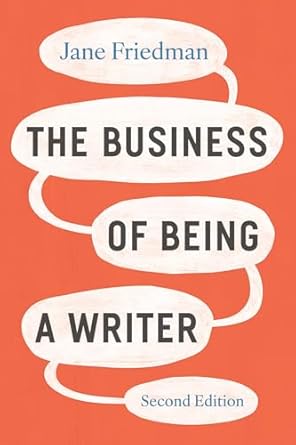
When I rebooted my author platform last summer, I was still trying to sort out the things I wanted to share on Instagram throughout the week. The idea for a weekly resource on writing came to mind, so I sifted through my piles of writing books at home and whatever I found at the local library. I came across Jane Friedman’s The Business of Being a Writer, read it, enjoyed it, aaaaaand never shared it on Instagram.

When I found out there’s a second edition of this book, I knew I had to share my recommendation of it here. 🙂
See, after my own adventures both happy and sad in the world of publishing, a line from Friedman struck me:
The best writing programs often believe their job is to teach the art and craft, or that students shouldn’t allow business concerns to influence their development and direction.
Heavens, ain’t that the truth. In my classes, “Stephen King” was a dirty word, and the only fiction worth reading was prize-winning literary fiction for adults. Don’t bring any of that children’s dribble or–gasp!–young adult nonsense into the room.
That’s what made Jane Friedman’s In the Business of Being a Writer a kind of tutelage in the concept of writing for a career. When my initial publishing deal occurred, I had NO IDEA what I was getting into. Apart from knowing it needed lots and lots and LOTS of time, I just rolled with whatever the publisher told me to do. And some of it was certainly important: network with other indie writers and offer to do reviews for one another, send ARCs to book reviews online, and so on. But like any selling job, it felt like I was just wandering the virtual streets selling my wares rather than working on any stories. And that was on top of teaching part-time and raising little B’s.

Throughout history, authors have laid the blame for their less than desirable economic situation on publishers, but such asccusations almost always betray ignorance of how publishing works.
Since that time, I’ve come to appreciate how complex and SLOW the traditional publishing machine is. Publishers are trying to catch the trends and run with them for as long as they sell. Just look at all the MG and YA series that came out after Harry Potter, or the reimagined myths and fairy tales for teens or adults by Sarah J. Maas and the like. If at first they sell, then keep making them until they don’t.
No writer is entitled to earn a living from his writing, or even to be paid for his writing; once you seek payment, you have to consider the market for what you’re producing, especially during a time when supply outpaces demand.
And herein lies the tough love writers need to hear. No one has to pay us for our stories. Sure, that’d be nice, but they don’t have to. And if we all jump on a trendy bandwagon, then yeah, the supply is going to eventually drown out the demand.
There are tons of useful tidbits like this in the 2018 edition of Friedman’s book. A huuuuuge one that struck me personally was this:
In a word, brand is expectation. What do readers expect from you? Like it or not, they will form expectations.
I was so damn proud of my western fantasy novella Night’s Tooth. It was fun to brainstorm, fun to plan, fun to write, and fun to market here on my site. But it did not connect with others like my first novel. Why not?
My first novel was a Young Adult fantasy featuring a teenage girl. Sure, there were also monsters and magic and mayhem with pies, but the protagonist and the themes were VASTLY different from Night’s Tooth. That novella features a side character from the novel hunted by bounty hunters during Wisconsin’s frontier days. That is not the same kind of story at all. Why would that story attract the same kind of audience as the first? I had to face the fact that it wouldn’t.
You should do the work that helps you get more familiar with the business side of writing so you can make better decisions for your career….you have to give due attention to both the art and the business.
Friedman’s book is a master guide through all the non-story stuff a writer has to contend with if they want to pursue writing full-time. Heck, even, if you want to keep writing as a secondary career, it’s still important to understand how a platform isn’t just social media, that “free” content now does not promise sure money later, and that print journals aren’t the only “reputable” places to publish short work. Even the community-building tips she shares are worth reviewing.
Remember: literary citizenship isn’t about focusing on yourself; it’s about focusing outward… to be a recognized community member means operating so as to generate respect and trust.
Here’s a lesson I’ve definitely taken to heart. That’s why I interview folks so often here, and why my Instagram is way more about motivating others than pushing my books. I get that it’s important to keep one’s work in front of other people’s eyes, but mutual support should come first, always. That’s how you reach more eyeballs. 🙂
This is just a sampling of my notes from the 2018 edition. The 2025 edition promises breakdowns about contracts and taxes, going multimodal (video and audio content), building a business model, and more. Whether you’re a career writer or a writer with another career, Friedman’s work will guide you through the logistical labyrinth that is the author life.
~*~
Coming up? I’d like to share what seems to be a problem in today’s publishing and how I’m trying to approach it in my own way. There’s a podcast and interview underway, of course, and let’s not forget the classic summer adventure…
Read on, share on, and write on, my friends!
 Jean Lee's World
Another fine blog. I don’t know how you do it. Regards, Mike
LikeLiked by 2 people
I’ve no idea either, my friend. xxxx May the summer give you some delightful misadventures!
LikeLiked by 1 person
Sorry I’ve been late. Illness the curse of all things. I’ll catch you a tad later. Regards, Mike
LikeLike
Jane Friedman certainly gives good advice as well as you do. Good post.
LikeLiked by 1 person
She gives me a ton of ideas! 🙂 We all need some support along the way! xxxxxxxx
LikeLiked by 1 person
Great post with sound advice.
LikeLiked by 1 person
Many thanks! It’s so important to remember authorship is so much more than writing.
LikeLiked by 1 person
Wonderful again my friend xxxx
LikeLiked by 1 person
Many thanks, my friend! I hope you and Hawklad are well. xxxx
LikeLike
Very enjoyable reading today,
LikeLike
I’m glad you enjoyed it! xxxx
LikeLike
Oh, that was interesting… useful advice there! Plus, I really enjoyed that little clip. Thanks for that, Jean xxxxx
LikeLiked by 1 person
You’re welcome, my friend! Here’s to all of us gearing up our skills as writers both creatively and technically in the days to come. xxxxxxxxxxxxxx
LikeLiked by 1 person