You walk into a bookstore. You meander over to the fantasy area. What do you see? Lots, and lots, of girl books. Dude, where are the dudes?
I honestly didn’t think much about this until I started on Line the Stars, which features male protagonists. In fact, the majority of the cast will be male. Yet when I scan bookshelves or the top 50 scifi/fantasy reads on Amazon, the majority of the books are female-centric. It’s totally fine having female-centric stories (I’ve written a couple myself), but it looks like the publishing pendulum has swung so far that male-centric stories barely make a blip on the market. What’s especially peculiar is that even when I tried to see if anyone’s studied this conundrum, the research harks back to 2019 or 2020, when there was some more balance between the genders. A pop-culture critic out of New Zealand also commented on this, and I think his points strike at a troubling trend. (Warning: he has his profane moments, but his argument is sound.)
Another YouTuber, the Nonsense-Free Editor, also touches on the struggles men and boys face in finding stories that would appeal to them as she interviews author Jeff Putnam.
When I look at Biff and Bash, I see boys with very unique reading interests dominated by nonfiction. Currently, Biff studies Star Trek ship schematics or This Old House manuals with the occasional weird facts book. Meanwhile, Bash reads up on Transformer collections or haunted houses with the occasional retro toy catalog. When they’re self-motivated to read a text-heavy book, they do not go for fiction. That may be influenced by Autism to some degree for Biff, who struggles a lot with abstract things that he can’t visualize, but that’s not the case for Bash.
After watching these videos, would there be any fun genre fiction out there for my sons to peruse?
As the YouTuber Echo Chamberlain and author Jeff Putnam say, the only way to get boys excited about reading is to get boys writing for boys to read.
Now initially I had a problem with this, being a woman working on a trilogy geared for male readers, but I could understand his point. When it comes to action, when it comes to science fiction, when it comes to stories focused more on adventure than, say, relationships or self-discovery, those stories tend to be written by males.
Where did that kind of masculine writing go in the fantasy stories? Or, did I just not understand what boys are looking for? I’m a mom of boys, dammit, so I better talk to them and figure this out.
~*~

Bash loves Dave Pilkey graphic novels, and he’ll try others of a similar ilk because he likes the art. There’s a lot of goofy humor in those stories, and a lot of action. The occasionally heavier moments (like Cat Kid being abandoned by his “father”) do not last long. Overall, the books contain something I would appreciate at that age, too: fun, action, and adventure.
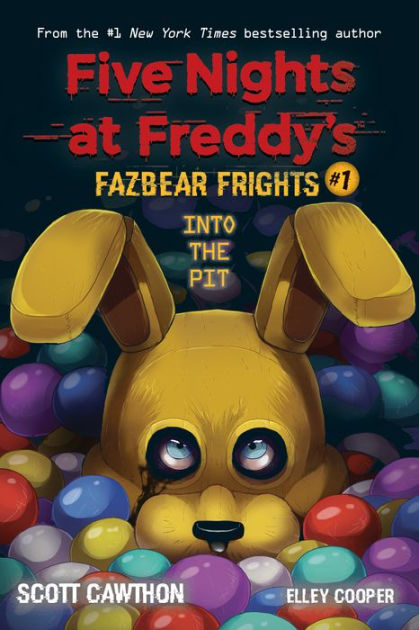
Biff loves the Five Nights at Freddy’s games, and so he will read those graphic novels and short stories for fun. Once in a while he’ll read manga about Kirby, another video game character. Sure, he will read the fiction dictated by school, or fiction I challenge him to try, but for his own choice? Nope. It has to be characters he’s familiar with in a lore he understands, ideally with jump scares and creepy endings. So, familiarity means a lot, and boys can expect things to get dark and a bit bloody–like Jeff Putnam said in his interview, it’s all about the risk. The characters should be facing something scary so that the reader can face that fear by proxy.
For a change in perspective, I spoke with Anne Clare’s son, who’s the same age as my twins. He said he likes trying fictional books that others he knows recommend; that way, he knows he’s getting something good. But then he also raised another important point: He didn’t want to read a book that didn’t have a boy main character.
I talked to Bo about this too, and his memories of reading as a kid synced up with Bash and Anne’s son.
- Comics. Bo LOVED comics as a kid. Like Bash, he enjoyed the action-oriented visuals with all those dialogue bubbles. Entire comics could be devoured in a single sitting. He enjoyed books like Hardy Boys as well, sure, but most of his reading diet for a long time was comics.
- Boy main character. Comics had and still have their share of female-centric editions, and that’s fine. But those never appealed to Bo. He loved the ensemble stories that included females, but a female solo storyline never appealed to him. (And by the market sales of comics, that’s true for a lot of readers.)
Then Bo mentioned something else he read when younger that doesn’t fit this mold: The Little House Books.

Now I had read Little House in the Big Woods because I had to for school. I never read the other ones, as they had no murders or explosions. Bo, too, had to read Wilder for school, but his class read The Long Winter. Then Bo chose to read more of the series of his own choosing. I HAD to ask why.
“Because that story is about survival. That family goes through so much trying not to starve. I got to care about those characters, and I wanted to see what else happened to them after the story ended.”
For Bo, it didn’t matter that a girl was a main character. The theme of survival overran that. It reminded me that when a story has a strong plot with clear stakes that impact characters on multiple levels, the main character really could be anyone or anything. Why? Because the reader cares about whoever’s in the situation and wants to see them come out the other side.
We are often told that, as writers, we should write the kind of story we want to read. I, a female, have written both female and male-centric stories. I enjoy them both, as I’m sure many of you fellow creatives do, too. Yes, there’s the struggle in getting male-centric stories out there right now, but we shouldn’t let the market limit us. When we create a story-world with themes that connect with our readers’ inner selves, they’ll be eager to explore with whatever character we create to walk alongside them.
~*~
Coming up, I’ve got a podcast, another interview, some fun with poisons, and of course, a trip to summer camp…in space!
Read on, share on, and write on, my friends!
 Jean Lee's World
I guess I should be glad my books have male protagonists, then.
LikeLiked by 1 person
You should! The market seems to be flooded by female protagonists. Again, female protags are fine, but there needs to be a balance, you know?
LikeLiked by 1 person
🙂
LikeLike
You know what, you’ve discovered the ‘modern male’. So many of them no longer read a book or let alone write one! I’ve 3 male kids, now grown up, and only one reads, the other 2 never have. Talking to them they let me know that none of their friends read. To me, a sad planet we are on. All the best, Mike
LikeLiked by 1 person
That is sad, my friend, but it does seem to be partly because of what’s out there. What’s being published to cater specifically to male interests in the different genres? Not much, and it’s sad. Granted, some are more driven to a certain kind of writing–Biff and Bo are always going to prefer nonfiction, I think, to fiction, and it seems there’s a bit more balance there as far as what’s published for different tastes. But when it comes to things like fantasy writing, it is DOMINATED by women right now, and that makes it really hard to attract male readers to the genre.
LikeLiked by 1 person
Interesting topic. I tried to remember what I read as a kid. I always liked mysteries (whodunits) even as a child. So, I clearly remember reading books like “Nancy Drew.” I was also into the old tv series, Dark Shadows, when I was a kid. So, I read books related to that show, and the main character there was a male vampire. Do vampires count as male protagonists? Anyhow, I agree the main thing is that the book has an interesting plot, and it doesn’t hurt if there is an interesting protagonist and other interesting prominent characters (both male and female).
LikeLiked by 1 person
I was thinking about this, too! When Bo and I were kids, books were still a strong source for entertainment and escape. Stories could be written and read for fun without the need for any strong lesson, so if you wanted to throw in a vampire or weird school theft or both, go for it! That’s how one could devour thirty of those Goosebump books or comics or Nancy Drew in a week–they weren’t work to read!
LikeLiked by 1 person
A friend writes both female and male-centric books for children and young adults. She uses her own name for fairy stories and a male pen name for pirate stories.
LikeLiked by 1 person
That is a REALLY good point, Peggy. I’ve wondered if having a different pen name for a different kind of story would help as far as selling goes.
LikeLiked by 1 person
Eleanor thinks it does.
LikeLike
I tried leaving a comment but had problems, so I am replying to your email. I am a male author who has written realism fantasy books with boys as main characters. The boys range in age from about 11 to late teens. I invite you to check the Change of Luck books on my website. Also, look at In the End. https://www.authorkensaik.com https://www.authorkensaik.com/
>
LikeLiked by 1 person
WordPress can be trick, Ken, so thank you for your persistence! I’ll be happy to check out what you created. Thanks for sharing! xxxxx
LikeLike
I mentioned to my husband about what he really likes – and also from way back. Comics, straight away, he said – as soon as he could read. Loads of those, and all kinds as well. He also went to the library, in the children’s section, but he would go straight to non-fiction… and there were beautiful books, and they are even better now. Things like dinosaurs and snakes and stuff. Still, just a thought.
P.S. you know how much I still love the Laura Ingalls Wilder stories.
LikeLiked by 1 person
And that’s what’s so peculiar about my brood, Chris! Bo agrees that he LOVED comics when he was young, and I would have thought that such a format would be a sure thing with a kid like Bash. Yet I guess it’s the genre of the comic that keeps him away; he’s not a *superhero* kid…well, unless it was Captain Underpants, lol. Maybe that was part of it–superhero comics aren’t known for their humor, though humor can be in them. But with a character like Captain Underpants who’s fighting Professor Poopypants, how can you NOT have humor?! xxxxxx
LikeLiked by 1 person
So what’s keeping boys from writing, I wonder? I mean, weren’t the Hardy Boys before Nancy Drew?
LikeLiked by 1 person
I know! It seems that a part of it could be that a lot of agents, editors, and leaders in the publishing industry are women, and that could be influencing decisions that shift writing away from more masculine themes. We share what we like, right? But as in all things, a balance is crucial!
LikeLiked by 1 person
It’s true. I am working on the audio version of Oil and Water and I’m going with a man’s voice (it’s AI) so as not to lose male readers. 🤷♀️
LikeLike
Way way back for me it was Sherlock Holmes, Tolkien and Michael Moorcock from the library. Couldn’t really afford comics.
LikeLiked by 1 person
Comics add up fast, it’s true. When Bo was a boy, he’d buy piles of comics being sold at flea markets because they were cheap. Regular comics, though, add up FAST. xxxxx
LikeLike
It’s such an important subject to talk about. I wonder if not enough kids are expected to read these days; some literally won’t know what they’re missing.
And I think the male pen name is worth considering in those cases, if nothing else it can remind boys that boys can write books. And it might be more appealing to them.
In all honesty, if I saw a historical bodice-ripper penned by ‘Chuck Butchman’ I’d probably proceed with caution.
LikeLike