Welcome back, my fellow creatives!
A long, long time ago (in another galaxy and all that), I wrote a couple of pieces about the eternal storytelling conundrum that is character death. The first dealt with the film Predator and my lament for Billy…well, and also understanding that you must kill the occasional character before they draw the spotlight away from the hero.
The second part utilized a couple 80s “family films” (aka, nightmare fuel) to reflect on killing innocent cameo characters in order to raise the stakes.
Today I want to return to this topic of Death…not literal death. Well, sort of. Not Death the action or state of being or anything. I mean Death the character in Terry Pratchett’s Discworld series.
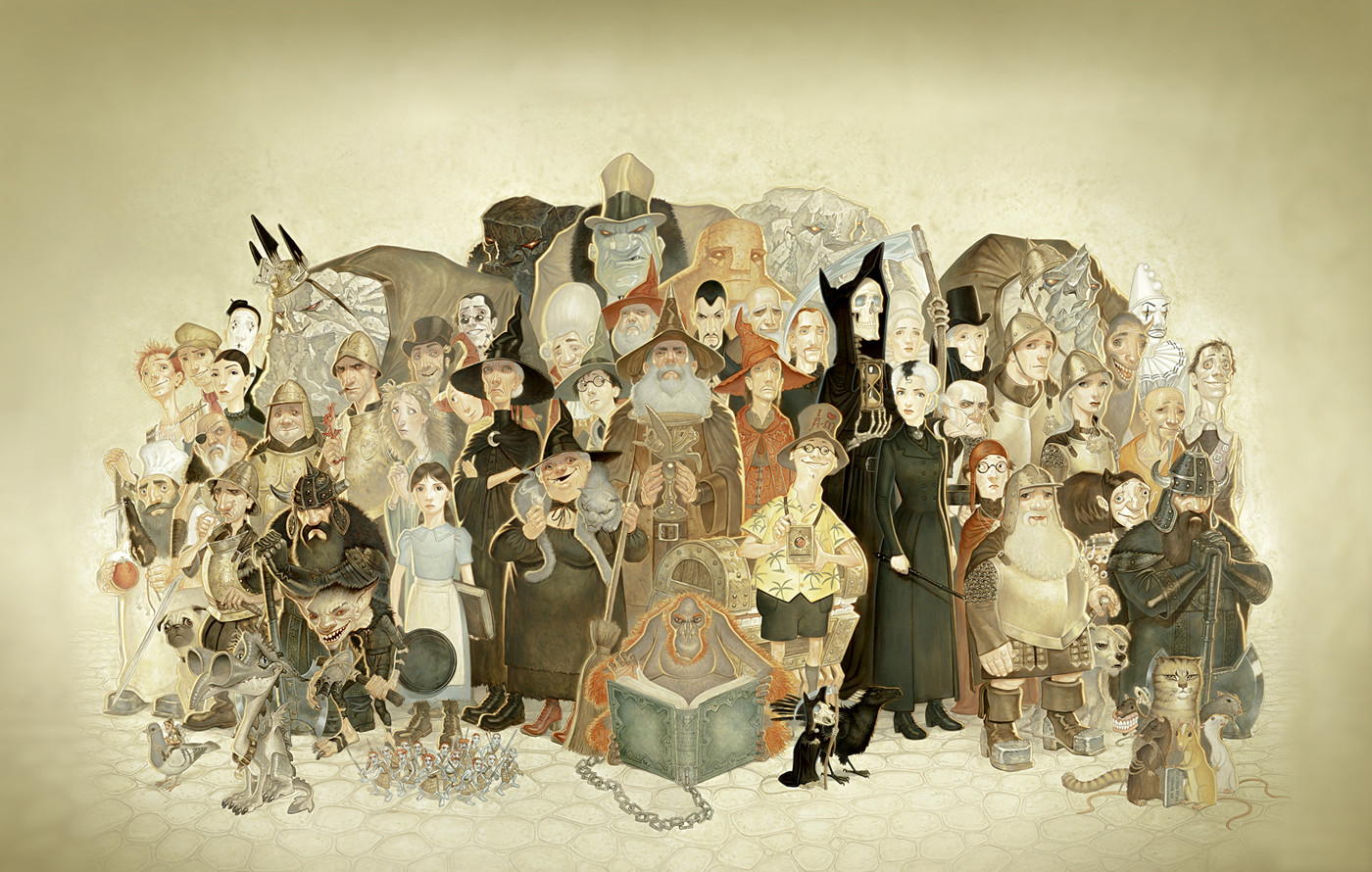
Oh man, where have these books been all my life? I’m shocked my father, a scifi/fantasy nut, never tried them. Each book overflows with humor and worldbuilding. They remind me of Diana Wynne Jones, only the narrator enjoys breaking the fourth wall quite a bit (which is perfectly fine by me). I’ve been trying to get my three B’s to read them, and so far, Blondie enjoyed the first few books before immersing herself in several manga series. Biff and Bash LOVE pouring through the supplemental books, such as the art books, the Ankh-Morpork archives, the graphic novel about the last hero…everything except, you know, the novels themselves.
Put a pin in that for later.
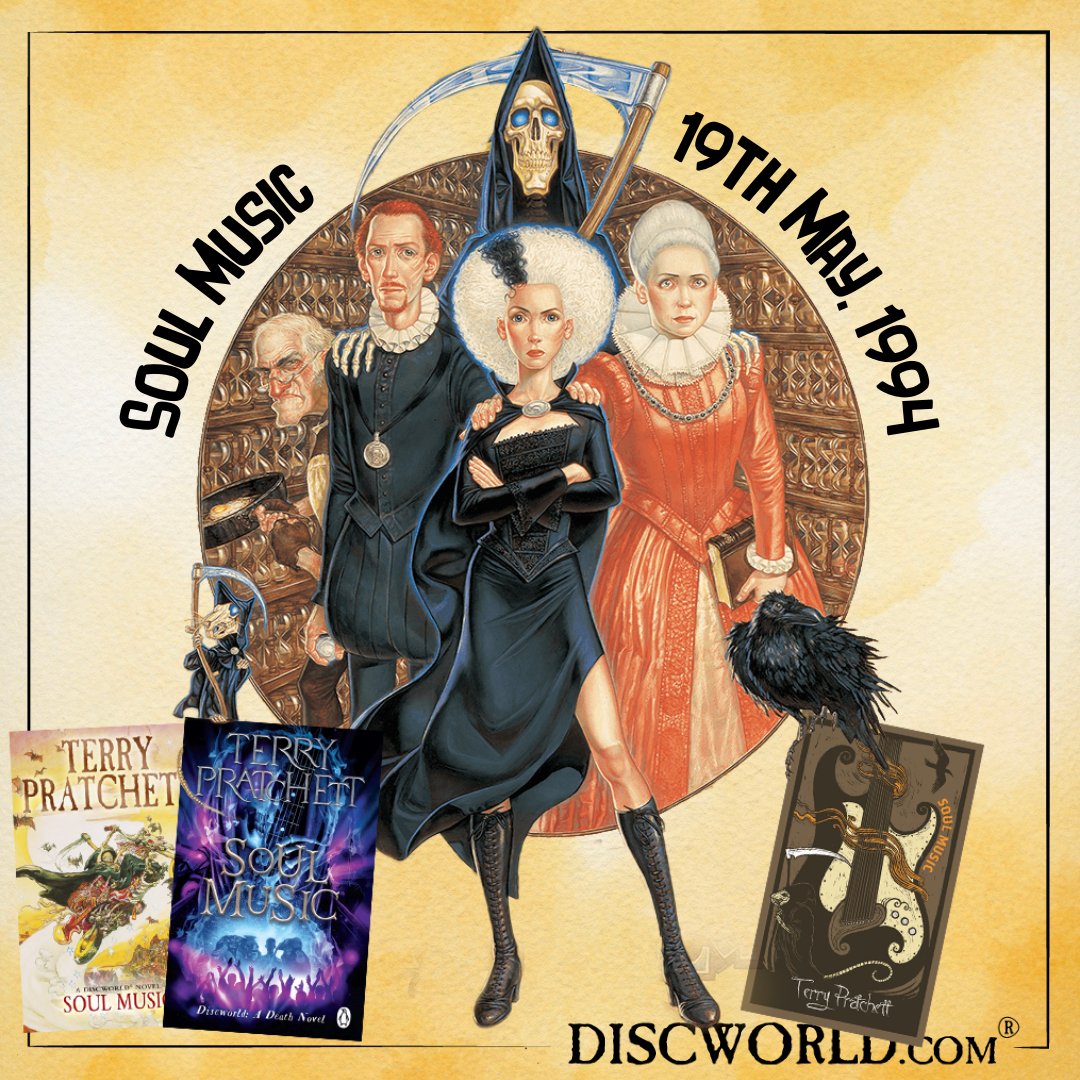
Death, that Grim Reaper of souls and lover of cats, makes an appearance in several Discworld novels—sometimes as a third-stringer, sometimes as a primary. In the fourth book Mort, he is a primary player. Death selects Mortimer to be his apprentice for the cloak and scythe, and of course, hijinks ensue.
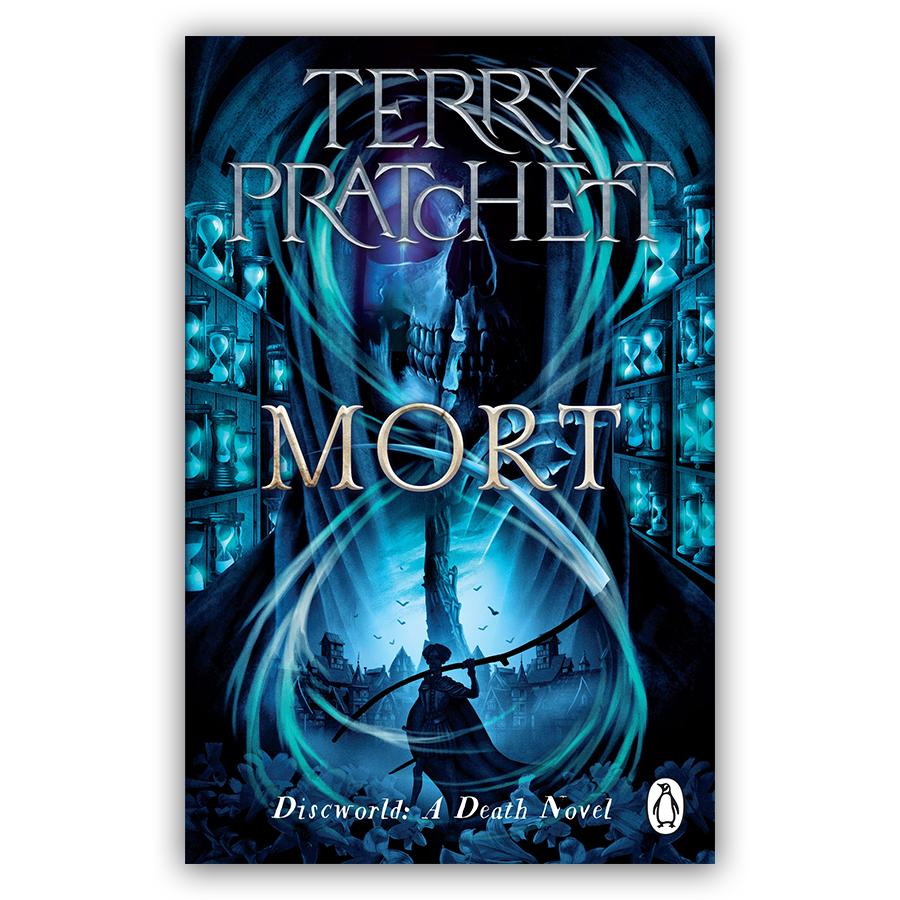
Now I’ve no intention of giving anything away here. Well, sort of. I spoiled things in a way for myself, so I’ll share that spoiler here with you, as that’s the impetus for this post.
First, the blurb for Mort:
Death comes to us all. When he came to Mort, he offered him a job.
Death is the Grim Reaper of the Discworld, a black-robed skeleton with a scythe who ushers souls into the next world. He is also fond of cats and endlessly baffled by humanity. Soon Death is yearning to experience what humanity really has to offer, but to do that, he’ll need to hire some help.
It’s an offer Mort can’t refuse. As Death’s apprentice he’ll have free board, use of the company horse-and being dead isn’t compulsory. It’s a dream job-until Mort falls in love with Death’s daughter, Ysabell, and discovers that your boss can be a killer on your love life…
So I’m pacing and reading Mort, chuckling to myself as I am oft wont to do when I read Pratchett, when I trip once again trip on some books my sons left on the floor. One of those books is Turtle Recall, a character guide to Discworld. A whim hits me: why not look up Mort?

And here’s what I see:
Mort. Mortimer. Youngest son of LEZEK. Tall, red-haired and freckled, thin, white face, with the sort of body that seemed to be only marginally under its owner’s control; it appeared to have been built out of knees. He had the kind of vague, cheerful helpfulness that serious men soon learned to dread. Despite these drawbacks Mort was chosen by DEATH to be his apprentice, and during that time became considerably less undirected and considerably more serious. Mort married YSABELL and became Duke of STO HELIT. They had a daughter, Susan STO HELIT, and were later killed in a coach crash. Turtle Recall, p.258-9
He’s WHAT?!?!
Mort’s DEAD later in the series? Why? He’s got a marvelous coming-of-age story in Mort, but then later in the series he’s DEAD? Why not use him again? Discworld’s a flying flat planet of endless potential. The wizard Rincewind’s shown up a bunch. I’m excited to see what Granny Weatherwax does next. I’m always thrilled to see Death come along, irritated by the wizards or trying some new bit of human experience for himself, like the card game bridge…
And I thought on this for a bit.
Disworld IS precisely that: a world. There’s no need for every Discworld novel to have the same group of characters across 41 novels. What series could possibly last that long with the same little cast? You must introduce new blood.
And by that same token, you must take some old blood away, too.
But some characters can never leave, can they? One of the few things a person can be certain of is death, so Death can’t really go anywhere.
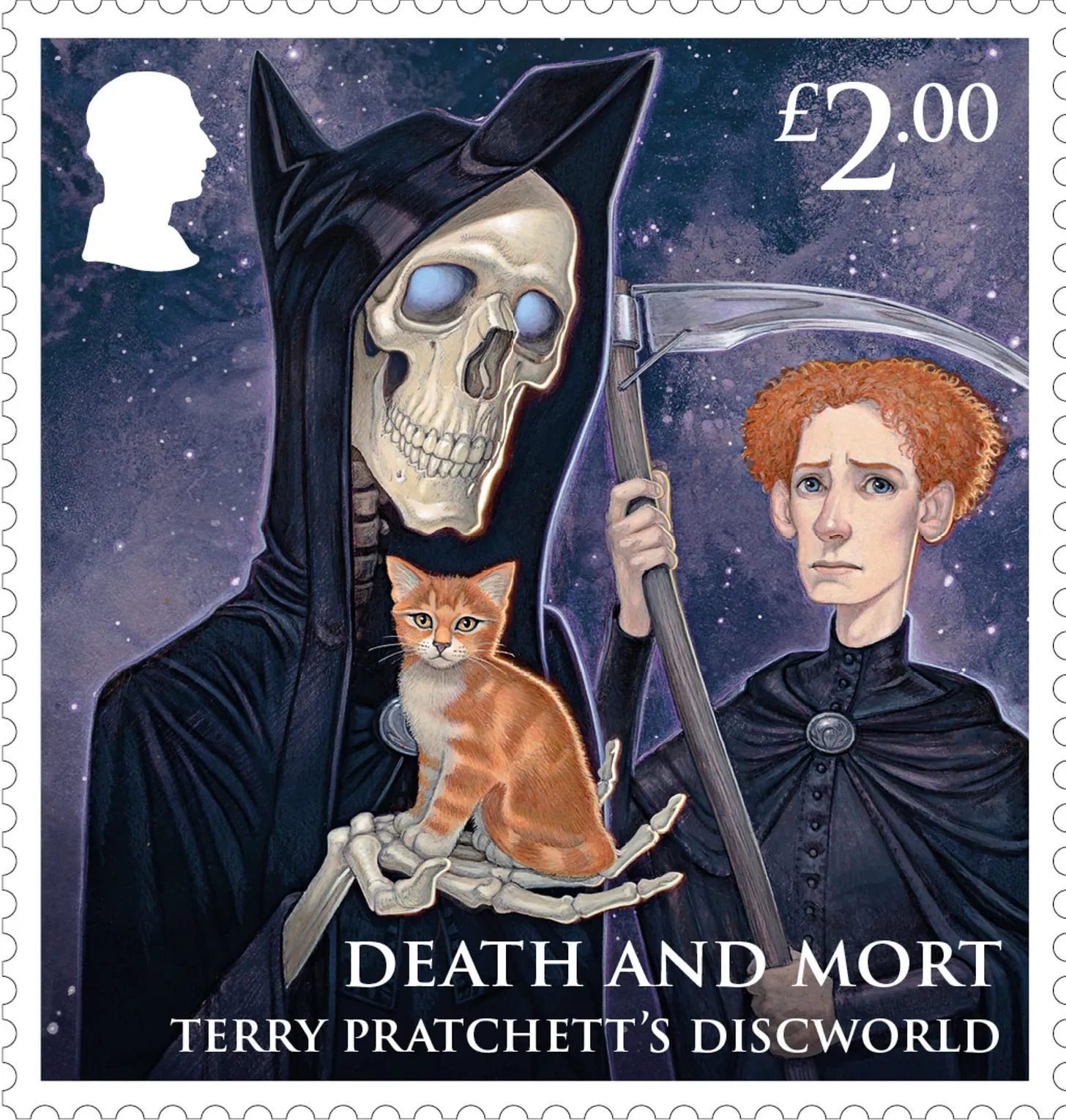
What to do with him, then?
Give him a chance to grow.
But how to show that?
It would take a lot to change Death.
The potential for growing Death as a character comes in the second book (The Light Fantastic), when Rincewind and his companion Twoflower end up in Death’s house. Death keeps a house, a garden, and even took in a girl to raise as his own daughter. Death already has a propensity for enjoying earthly things like family and flowers.
The novel Mort takes this potential and turns it into growth. When Death has Mortimer (aka Mort) reap a few souls on his own, Death takes the night off. He drinks, gambles, and even visits an employment office. He winds up a fry cook and finds he loves cooking (The visiting stray cats are a bonus.)
WHAT IS IT CALLED WHEN YOU FEEL WARM AND CONTENT AND WISH THINGS WOULD STAY THAT WAY?
“I guess you’d call it happiness,” said Harga.
Inside the tiny, cramped kitchen, strata’d with the grease of decades, Death spun and whirled, chopping, slicing and flying…He’d opened the door to teh cold night air, and a dozen neighborhood cats had strolled in….Occasionally Death would pause in his work and scratch one of them behind the ears.
Story-wise, things start tipping wrong-ward for reality. Death NO LONGER SPEAKS LIKE THIS, but Mort does. Mort doesn’t kill someone who needed to die because she was a hot princess, causing reality to warp and bubble in on itself so history, proper history, can continue on. But because Death is losing his abilities to Mort, he doesn’t sense the problem. He doesn’t even seem to care such a problem could be.
And frankly, who doesn’t have that bit of selfishness when they’re experiencing a midlife crisis?
While I love Mort and Death’s daughter Ysabell and even the cranky old wizard-servant Albert, I realized that Mort was just as much Death’s story as Mort’s. Death was feeling stuck. Death didn’t know what to do to help his unhappy daughter. Death wanted a change, but he had no idea how to make a change happen. By the end of Mort, Ysabell and Mort are married, Death is back to doing The Duty, and reality has settled down to its natural state.
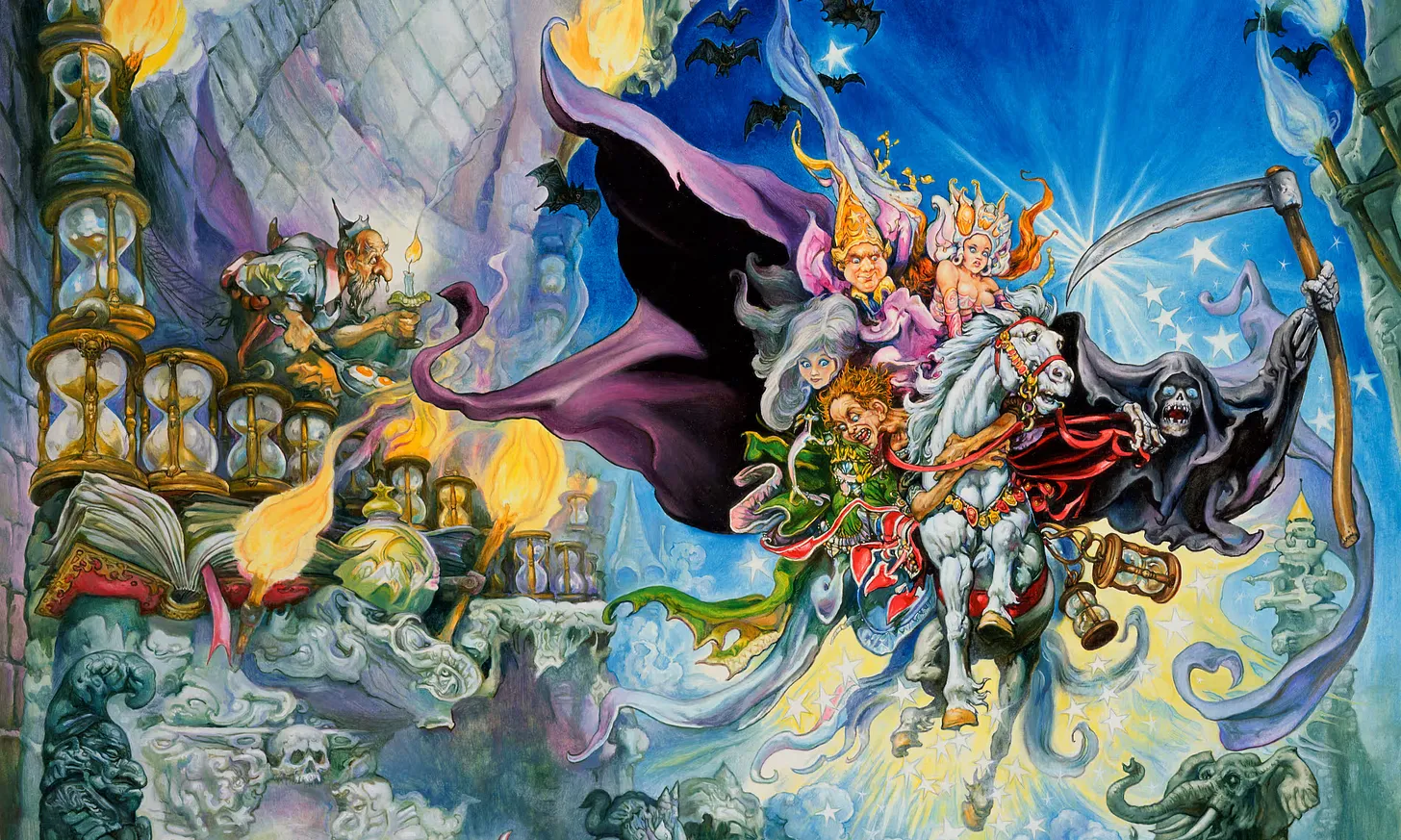
And yet, the time will come, a dozen books later, when Mort and Ysabell die. Surely Death wouldn’t let the soul of his daughter move beyond this mortal plane, would he? And wouldn’t Mort, knowing the power of Death because he was Death for a time, choose to stay, too?
“No one dies in Death’s own kingdom. And you’re pleased with that?” said Mort.
“I’m more than two thousand years old, I am. I’ve lived longer than anyone in the world.” [said Albert.]
Mort shook his head.
“You haven’t, you know,” he said. “You’ve just stretched things out more. No one really lives here. The time in this place is just a sham. It’s not real. Nothing changes. I’d rather die and see what happens next than spend eternity here.”
Mort has no desire to live past his natural time. I don’t have to skip ahead twelve books to see how the coach crash went down; I know from Mort and Ysabell’s actions in THIS book that they would accept their time. They would be ready to see what’s next.
Grief is a very powerful catalyst for change. For growth, one way or the other. What would it take to put Death in a crisis? He’s already had his midlife crisis in Mort. In Reaper Man (the 11th novel), Death loses his job. That’s one kind of loss anyone can relate to.
What loss could be both new and effective beyond that?
That leaves the loss of loved ones. That kind of loss is as critical as it gets.
But such loss also allows room for new blood. And that new blood is Susan, Mort and Ysabell’s daughter.
Readers want to see characters grow. Their journeys and challenges must change them somehow. And challenges don’t feel like real challenges unless there are risks, unless there are stakes. And how do we show those stakes? We reap the darlings we have sown into the story-world. That darling may be a place. It may be a person. It may be a cat. Whatever it is, so long as the loss affects your character, it will affect your readers. And they will be all the more eager to see how your character heals…and through that character’s journey, they’ll heal, too.
~*~
Coming up, I’ve got more adventures in the Story Empire, more author interviews, some music and trend-bucking, and Blondie’s eager to get back on here, so of course I’ll let her do that. 🙂
Read on, share on, and write on, my friends!
 Jean Lee's World
⭐️⭐️⭐️⭐️⭐️
LikeLiked by 1 person
Thank you!
LikeLiked by 1 person
Ahh… Wonderful Terry Pratchett!!!
LikeLiked by 1 person
He’s been a joy these past few months!
LikeLiked by 1 person
You make me want to read these books, Jean. They sound creative and fun, and I enjoyed the snippets and the discussion related to Death and death. I have tried the first book in the series and for some reason, I just can’t get into it. I’ve wondered if I have the right kind of sense of humor for them. Do they get better as you move through them?
LikeLiked by 1 person
I do wonder about the writing style and humor. When I cajoled my daughter into reading HOWL’S MOVING CASTLE, she didn’t dig it as much as the film. I think certain writers, like Pratchett and Jones, fit a particular kind of reader because of the humor and fourth wall breaking. I’m not very far into the series, but I love the style–it fits me! 🙂 Like you say, though, it’s not for everyone, and that’s totally okay. Thank you for visiting!
LikeLiked by 1 person
How interesting. You’re not the only one who loves the style, that’s for sure. 🙂
LikeLike
The brilliant Mr Pratchett. Read everyone of his books. Mum would buy me his latest book for Christmas. I so miss those days. Well almost every book. I haven’t read the last page of his last book. I want to be able to think that there is still unread Practchett out there. xxxxxxxx
LikeLiked by 1 person
That’s beautiful, my friend. I do the same with Diana Wynne Jones–there are few I have not read, and I just cannot bring myself to open them because there will be no more. xxxxx
LikeLike