I keep reinventing myself. My voice is the illusion that my text speaks, and my readers assign it a personality. So when I become a new person, I need a new persona, a new voice. –Don Fry
Welcome back, my fellow creatives!
Today’s post will be a touch different when it comes to writing resources. Initially I had planned to share the treasure trove of writing books my husband Bo gave me for Christmas, but I’ve been so caught up in one that I thought it worth its own little post.
Now I appreciate there are plenty of books out there about voice. Readers and writers alike seek a unique voice so the storytelling does not feel like some mass-produced cookie-cutter nonsense. And this comes from the girl who LIKES schlock.
But just because I enjoy a good dose of schlock now and then doesn’t mean I want to write that way…all the time, anyway. Writing Voice has been a pleasant guide as well as a tool for reflection on some of my past efforts in crafting voice as well as a reminder why I take to certain writers. Along with being terrific stories, I enjoy their style of writing. That is, I enjoy their voices. I could listen to them aloud with as much pleasure as watching a favorite film for the hundredth time. Here are just a few examples…no, I’m not including Agatha Christie, as I’ve written LOADS about her, lol.
Ray Bradbury: Prologue to Something Wicked This Way Comes

First of all, it was October, a rare month for boys. Not that all months aren’t rare. But there be bad and good, as the pirates say. Take September, a bad month: school begins. Consider August, a good month: school hasn’t begun yet. July, well, July’s really fine: there’s no chance in the world for school. June, no doubting it, June’s best of all, for the school doors spring wide and September’s a billion years away.
But you take October, now. School’s been on a month and you’re riding easier in the reins, jogging along. You got time to think of the garbage you’ll dump on old man Prickett’s porch, or the hairy-ape costume you’ll wear to the YMCA the last night of the month. And it it’s around October twentieth and everything smoky-smelling and the sky orange and ash gray at twilight, it seems Halloween will never come in a fall of broomsticks and a soft flap of bedsheets around corners.
Do you feel that? The rhythm. That’s one of the things I love about Bradbury: the distinct rhythm created by the insertions, the comma work, the compound words. Seamus Heaney is another powerful example of such language.
Jane Austen: Chapter 6 in Pride and Prejudice

Occupied in observing Mr. Bingley’s attentions to her sister, Elizabeth was far from suspecting that she was herself becoming an object of some interest in the eyes of his friend. Mr. Darcy had at first scarcely allowed her to be pretty; he had looked at her without admiration at the ball; and when they next met, he looked at her only to criticize. But no sooner had he made it clear to himself and his friends that she had hardly a good feature in her face, than he began to find it was rendered uncommonly intelligent by the beautiful expression of her dark eyes. To this discovery succeeded some others equally mortifying. Though he had detected with a critical eye more than one failure of perfect symmetry in her form, he was forced to acknowledge her figure to be light and pleasing; and in spite of his asserting that her manners were not those of the fashionable world, he was caught by their easy playfulness. Of this she was perfectly unaware;–to her he was only the man who made himself agreeable no where, and who had not thought her handsome enough to dance with.
There are so many possible excerpts to share, and I highlight more of those when I was indeed reading a lot of Jane Austen in order to capture her style of voice for one of my Shield Maidens, Wynne. But I find that this one shows Austen’s ability with word choice to reflect characterization: a man falling in love in spite of himself.
Lee Child: Chapter 7 in 61 Hours
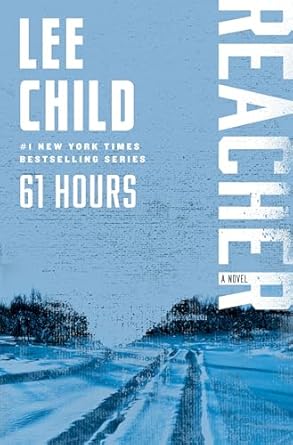
Peterson drove home in his squad car. Which Reacher thought was unusual. In his experience town cops dumped their squads in a motor pool and rode home in their personal vehicles. Then the next watch climbed in and drove away while the motors and the seats were still warm. But Peterson said the Bolton PD had a lot of cars. Every member or the department was issued with one. And every member of the department was required to live within ten minutes’ drive of the station house.
I recently explored how Child handles setting, but I also appreciate how Child utilizes short prose and fragmented sentences. They reflect his protagonist Jack Reacher: quick thoughts, quick decisions, quick action. This is not a storytelling style with the ebb and flow of Bradbury, and that’s okay. I wouldn’t want these two authors to sound the same, or for Austen to sound like either of them. (And for those who did want that sort of mash-up, you’ve got things like Pride and Prejudice and Zombies.)
There are authors we enjoy reading not only for what they write, but how they write.
In graduate school, I felt pressured to make myself sound “literary,” but I had no clue how to go about it. Why? Because I wasn’t ingesting a massive amount of deep, contemplative, “literary” fiction. When attending the poetry and prose readings of my peers, all sounded the same: bloated, unreal language read in a wavering monotone that could make any story an absolute bore. I wish Judy Bodmer had been on my campus to give my classmates and me the reality check we all needed:
I tell [my students] to forget everything they’ve ever been taught and to let their words flow as they’d speak them. When they do, it transforms their manuscripts. –Judy Bodmer

When we deny our authentic writing selves, we deny readers—and ourselves—our true voices. As Donald Maass rightfully calls out:
Not all beautifully written novels have a voice, or much of one. Pot-boiler plots may be exciting but also have little flavor. It is when the words on the page demand that readers take notice that they begin to hear the author’s voice. It isn’t words alone that do that, I find, but rather the outlook, opinions, details, delivery, and original perspectives that an author brings to his or her tale. –Donald Maass
There’s nothing wrong with celebrating the stark, the lustrous, or the absurd. Do WE like them? Then they are a part of our Imaginative Self, and that is the Self from which the story, and the voice, are born. As Jordan Rosenfeld highlights, the stories, films, and music that already matter to us will influence our voice. And that’s as it should be.
In seeking your voice, look to your obsessions and desires: that which haunts you and keeps you up at night. Think of the books you like, the shows you watch, the music that evokes deep emotion within you. The way words stick in your inner ear and the rhythms of your prose combine and manifest in your voice. As do the dialects you’re familiar with and the kinds of conversations you are drawn to eavesdrop upon. Voice is an amalgam of your tastes, your interests, your terrors, and your deepest desires. –Jordan Rosenfeld
Now, I’m not totally done with Writing Voice yet, but I’m currently digging Don Fry’s breakdown of aaaaaaaaaaaaaall the different technical aspects one can utilize in one’s prose and/or dialogue to create a unique voice for the narrator or a character. Here are just a few of the things he covers:
—Levels of diction
—Slang/Dialect
—Formality of grammar
—Sentence length
—Sentence structure
—Insertions
—Repetition
—Sophistication of reference
And that’s not even half of it!
So whether you’re looking for a resource to help you fine-tune your narrative voice, or you need some guidance in crafting a new character for a story, I highly recommend Writing Voice. I’m excited to see how their tips can help me develop the narrator for my WIP, not to mention the voices I’ll need for twin brothers to sound similar but not TOO similar.

Coming up? Okay, we have got to talk about one of Philip Reeve’s past stories and how it inspires as well as intimidates me. It’s also high time to talk about some world-building at the galaxy level. 😊 Of course a podcast is on its way, as well as a whole slew of new indie author interviews.
Read on, share on, and write on, my friends!

 Jean Lee's World
many years back I went to a weekly university poetry reading group. I would avoid writing my own stuff, just read from an old scruffy second hand poetry book. But it was amazing how many people suddenly either tried to develop a reading voice which was either Richard Burton or Sean Connery. Mine ended up more like Billy Connolly. Xxxxx
LikeLike
Hey, Billy Connolly is a treasure, so that’s awesome! 🙂
LikeLike
That was all interesting, but I’m afraid I was carried away with that little clip about the Space Mutiny… so fun and still bad, but good now! (giggling) xxxxx
LikeLike
It is HILARIOUS. Highly recommend! xxxx
LikeLiked by 1 person
Your work is pleasant informative and nicely-wttten. Thank you Jean Lee
LikeLike
And I thank you for stopping by!
LikeLike
Thank you Jean Lee.
LikeLike
You’re always welcome!
LikeLike