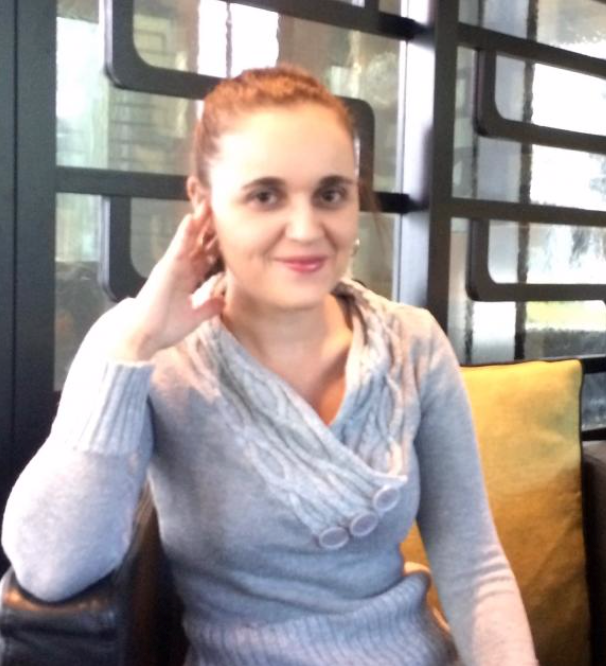
Welcome back, my fellow creatives! I’m thrilled to continue sharing some lovely indie folks I’ve met in our community–it’s so great to connect with folks again. This month, please welcome Sarah from Story Lamp Reviews!
Let’s start at the beginning, shall we? What first inspired the founding of Story Lamp Reviews?
Story Lamp Reviews started at the beginning of 2024 and it was a personal passion of mine. Since Covid, I had started getting through my personal reading list because I finally had the time to sit and finish each one. I’ve always had strong opinions on what I read and watch. After I started the publication, I decided that I wanted to develop a platform where others could share their opinions on books and films, too. When coming up with the publication name, I immediately thought that the word “lamp” in Story Lamp Reviews perfectly symbolised a source of light to shine on voices and stories that might otherwise be overlooked for whatever reason. And my co-editor says that he just really likes the name without having a real opinion on its symbolic meaning.
As an editor for an independent review site, what do you see to be the most unethical practice in the publishing industry?
There will likely always be unethical practices within publishing. My co-editor has had more experience in the traditional publishing sphere of print literary magazines and journals mostly. So he’s let me in on some of the more challenging aspects of the profession. And we have experienced some of it ourselves within our publication. It’s mostly receiving submissions of duplicate content.
From your experience as a reviewer, do you feel a big ego helps or hurts the power of a writer’s voice/story?
This is something my co-editor and I discuss all the time. The question is a little two-sided. I’ve found that a big ego can negatively impact the authenticity in the writing. Stories, voices and reviews work most effectively when they come from a place of vulnerability and honesty, and ego can get in the way of that if a writer has a certain chip on their shoulder. But then again, if the writer isn’t passionate and knowledgeable about the subject or topics that they are writing about, they may not get the intended messages across to readers. Some of the most powerful stories I’ve read come from authors who are willing to set their ego aside and focus on creating something meaningful and unbiased. But I think it really depends on the situation.
That’s a very fair approach. What would you say is YOUR kryptonite when it comes to reviewing work?
I’d say self-doubt. It can come into my mind sometimes when I’m working on a review or even in my own writing. I think there’s a lot to say about a film or a book in terms of criticism, and that can be so fun and engaging, but then you can start to think about whether you’re the right person for the job. An example would be my love for Alice Sebold novels. I can talk and write about her work endlessly. But there’s always a voice of self-doubt at the back of my mind asking something like, “What makes you an expert on her work?” So I often remind myself that every piece doesn’t have to be perfect and I don’t have to be an expert to have an opinion.
Have you ever gotten reader’s block? I know I have when reading some books for my podcast!
This happened to me a lot during the second half of 2024. I’d been dealing with a personal tragedy in my family and hadn’t been able to finish many of the books I desperately set out to read. It was very frustrating for a while, but the urge to read even in moments of loss or grief always comes back eventually. And when that happens I’ll go to one of my favourites like Dracula by Bram Stoker or The Lovely Bones by Alice Sebold.
How did Story Lamp Reviews build such a lovely network of contributors? I saw on Instagram that you’re seeking more writers to contribute too. Would you like to share some details about that?
When I first started this publication, I didn’t expect to get so many initial responses. And I’ve met a lot of amazing writers and readers through platforms like Medium and Instagram. Over time, we’ve been lucky enough to create a small but engaging community. I think it’s a continuous journey, though. We will always try to expand our network and get like-minded contributors wherever we can. Right now, we’re looking for more reviewers, but we’ve also added a new section to the publication that is dedicated to flash fiction prompts.
How does your work as a reviewer affect your work as a storyteller?

Sometimes it’s difficult for me to switch hats from reviewer to storyteller. But there’s a really interesting correlation with creating and reviewing. I’ve found that they go hand-in-hand. Whenever we pick apart something that we really like, or hate, we’re always better at assembling the pieces back together in new forms. So, while it doesn’t happen all at once, I really enjoy that process when it happens.
What was an early experience where you learned that writing had power?
Way back in high school, we had to create short paperback books that were supposed to be suitable for primary school kids to read. Then, after we wrote, printed and bound them we had to actually go to the primary school and read our entire books to multiple students. While I enjoyed creating stories with specific readers in mind, I was mortified to be reading it to a live audience, but I realised just how much power a story can have for someone.
Besides your kickin’ site, are there other sites/resources that other writers should subscribe to?
We like like-minded publications with similar aims and a sense of authenticity. My co-editor also occasionally writes film reviews for Frame Rated on Medium, so we’re big fans of them and are always looking for similar publications.

What does literary success look like to you?
My co-editor would say that to keep writing is the ultimate goal no matter the outcome. He’d say that literary success shouldn’t be dependent on things like marketability and sales, but the desire to keep writing and polishing work would be the writer’s key responsibility since it’s maybe the only real thing they can control.

Do you view writing as a kind of spiritual practice?
I think there’s a catharsis that comes out of it. The daily practice of setting aside time to do this one thing and hopefully not being disturbed seems meditative. I think that artists and writers can get lost in their work, which may bring them to a kind of revelation some people could call spiritual. But there’s definitely a discipline to it.
Have you read anything that made you think differently about fiction?
I think that every book brings new questions about existence and life to your mind. My co-editor would often instigate long discussions about writers who I wouldn’t ordinarily read—anyone from Richard Yates to Jhumpa Lahiri—but when I’m curious and dip into their books, I tend to find a new way of looking at a certain literary technique or character. I actually really love those authors now that I’ve discussed them in-depth with my co-editor, who seems to be an unofficial expert on Richard Yates.
Sounds like you and your co-editor are creating something amazing with Story Lamp Reviews, Sarah. Thank you so much for chatting with me, and I look forward to reading future editions of your reviews!

So, what’s coming up? Well, there should be a podcast in there somewhere. I’ve got some more old writing resource books to review, and of course, we must rock.
Read on, share on, and write on, my friends!
 Jean Lee's World
Fascoinating interview. It may even inspire me to tackle my personal reading list.
LikeLike
Many thanks, friend!
LikeLiked by 1 person
Oh yes, very interesting – great interview.
Plus that fab song, bouncing around in my chair! xxxxx
LikeLike
Weee! We all need our moments to rock 🙂
LikeLike
Jean bookmarked this to come by adn then forgot I ahd done that but just saw. A great post xxxxx
LikeLike
Many thanks, friend!
LikeLike
She is really smart and thoughtful. Her answers are not off the top of her head. She seems to have previously given a lot of thought to the topics/questions you presented to her.
LikeLike
I agree! I hope you’re well xxxxx
LikeLiked by 1 person
Such a great post. xxxx really enjoyed it. I must admit every time I go to Whitby, I try to find time to read part of the Dracula story set there. Still sends shivers down my spine xxxx
LikeLike
Thanks, and ooooh yes I agree
LikeLike