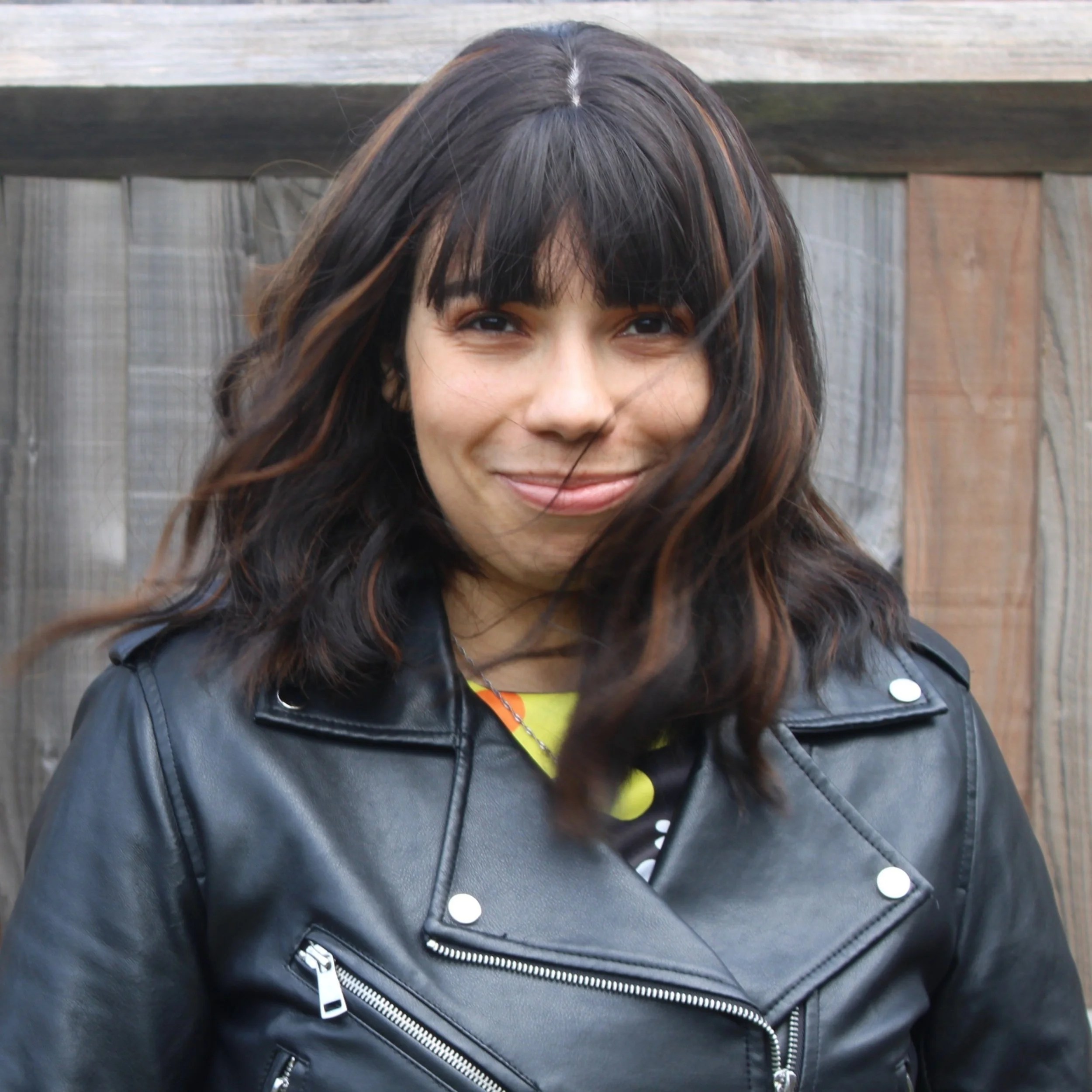
Welcome back, my fellow creatives! I’m thrilled to continue sharing some lovely indie authors I’ve met in our community–it’s so great to connect with folks again. This month, please welcome the paranormal horror author, Laura Clarke Walker!
Let’s begin with exploring your reading life. What was an early experience where you learned that language had power?
In the UK, there’s this fantastic children’s book called We’re Going on a Bear Hunt. Every kid here grows up with it and even as adults, I’m sure if you say to someone “we can’t go under it, we can’t go over it, we’ve got to go through it”, they will get the reference. As the family in the book travel through these different environments, there’s all this onomatopoeia: swishing and squelching and splashing. I have a very vivid memory of being in the school hall (so probably four or five years old) and our teacher reading us these incredible lines that we had to act out, battling our way through imaginary grass and mud and water. So evocative, so powerful, that I remember it thirty years later.

Are there any authors you disliked at first but have since grown into?
I don’t think this has ever happened to me, but I will admit that I might go into an author’s work
with preconceived notions! For example, a very good friend of mine gave me a copy of The Secret History by Donna Tartt last year and I thought it was going to be some overrated, self-important, ‘worthy’ piece of literary fiction. I have now read it four times and counting. It’s probably in my top ten books of all time. I am fully on the dark academia train now. So apologies to Donna Tartt – I did not know her game.
On my podcast, I do first-chapter book reviews; sometimes I want to keep reading, but sometimes I’m happy to get rid of the book after one chapter because I just can’t connect with the story. Have you ever gotten reader’s block, too?
I don’t really get reader’s block on a specific book – usually I’m quite good at vetting books before I read them (I only DNFed one in 2025). However, I definitely go through reading slumps! Sometimes, I can spend hours a day reading, flitting between different books/media, but at other times, I can easily go a month without reading much at all. Like everything, it’s a habit, but I know that the more I read, the better my own writing is. If I’m really in a slump, I’ll often go back to a book I know I love or find easy to get into – for me, that’ll be something like The Woman in Black by Susan Hill or anything by Shirley Jackson.
What reading or life experience inspired you to become a storyteller?
I loved reading books from a very young age, but from the age of six, I began to experience a range of speech and communication disorders (alongside other neurodivergences). Nowadays, these are mostly under control, but there were huge swathes of my childhood in which I physically could not speak. The only way I could convey anything was through writing, so my burgeoning passion very much became a necessity. Alongside that, I was always convinced that the imaginary was far more interesting than the mundane (as Jim Steinman once said ‘stronger than real life’), so I just never really stopped writing stories.

Oh yes, I feel the same about the lure of the imaginary world! Does writing energize or exhaust you?
I would say that the act of writing exhausts me, especially first drafts. I find I have to really intensely focus on drafting, which it does take a lot out of me (lots of espressos and snacks required). However, everything around writing, such as planning where to go next with a project or collaborating with people – that inspires and energises me.
On your blog, you mention staying in a number of haunted buildings since childhood. I’ve not yet
experienced a haunted house (and I pray I never do, lol). Did you want to dive a bit more into
those experiences or the former care home that inspired your debut novel Coldharbour?
While my family and I certainly don’t have the kinds of powers the Wildes have, I’d say we definitely attract the supernatural and yes, living in a haunted house and being part of a family where nearly everyone dies young definitely blurs the line between life and death for us. That’s certainly a recurring theme in Coldharbour. As for the care home, that absolutely directly inspires the Wilde house, 1 St Augustine’s, in Coldharbour, right down to the shadowy undergrowth that surrounds it!
What other kinds of research did you do to develop this world of vampires, spirits and bloody mayhem? Do you have any researching tips to share with your fellow writers here when it comes to worldbuilding?
To be honest, I definitely had a headstart on this because I grew up obsessed with the supernatural. I was the preschooler who loved Count Von Count and drawing gravestones, so I’ve picked up various scraps of folklore etc. over my lifetime. I tend, therefore, to use things that have really captured my imagination and that I think complement the story I’m trying to tell. For instance, demons and spirits crop up more in the Coldharbour stories that are specifically about identity, trauma, and dispossession.
I do read around these subjects too – there are great online encyclopaedias and I also will read more fiction that incorporates similar ideas to see how different writers have approached a subject. I would say the second Coldharbour book is a good example of this – that’s when the vampires come in, so I was reading books like Salem’s Lot and Let the Right One In (and, of course, Dracula).
In terms of general worldbuilding, I would always recommend reading (and watching) widely. There’s also no shame in keeping notes about what you’ve liked about something and trying it yourself. Let’s say you read three books with different magic systems in – you might like one aspect of one of them, another aspect in the second. Use that as inspiration. Also, don’t be afraid to have diverse influences. With Coldharbour, I reference Daphne du Maurier and Shirley Jackson – alongside Charmed and Buffy.
I’m always fascinated by character names. How do you select the names of your characters?
This is a great question, because some of these characters have existed since the Noughties! I’ve always liked the name Matthew; as for Alex, I loved watching Ashes to Ashes as a teenager and the protagonist was called Alexandra or Alex for short. Often, their background influences their name (Samuel Meyer is Ashkenazi Jewish, for instance), but there are also a lot of names from my own family in Coldharbour, such as Alan, James, Grace, and Matilda.
What was your favorite scene to write in Coldharbour?
I always love scenes with Alex and Matthew together – their conversations (and arguments) come very naturally to me, even if I have to edit them down a lot! In terms of the first Coldharbour book, though, it would have to be the night of the storm. It’s emotional, scary, cathartic, and romantic – readers have often told me that they love those chapters.

The life of a debut author is quite the roller coaster of networking, writing, editing, marketing, and more. Yet all these elements are a must when it comes to developing one’s career as a writer. When you look ahead five or even ten years, what does literary success look like to you?
My idea of literary success has definitely changed in the past year, ever since I decided to go the indie publishing route. That said, I think my fundamental want is the same: for my writing to connect with people. A lot of the things I love are very niche but often, the people who like those things really love them. I’d much rather have one person a year message me to say that Elizabeth is their favourite character of all time or to say that seeing Alex’s struggles has helped them realise something about their own life, rather than have people constantly telling me that my writing’s ‘alright’ or that they ‘quite like’ my books.
Thanks so much for spending time with me here! Let’s end with a fun one. As a writer, what would you choose as your mascot/avatar/spirit animal?
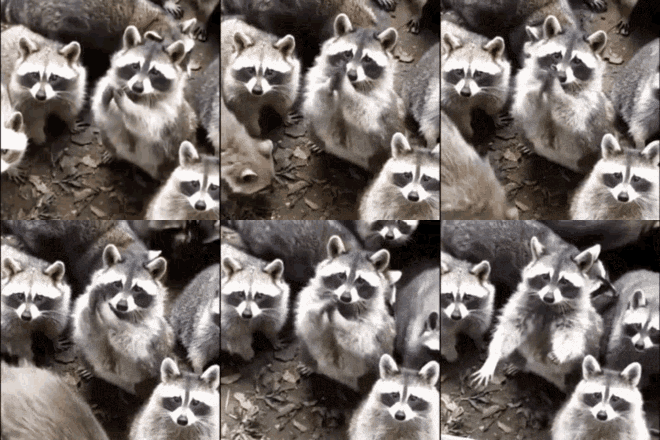
Probably a raccoon. They’re tenacious, solitary, and voracious eaters – much like me. They’re cute but can put people on edge a bit. Also like me! I’m also naturally nocturnal (though, because of life, I try not to be), so all in all, I’ve always vibed with raccoons.
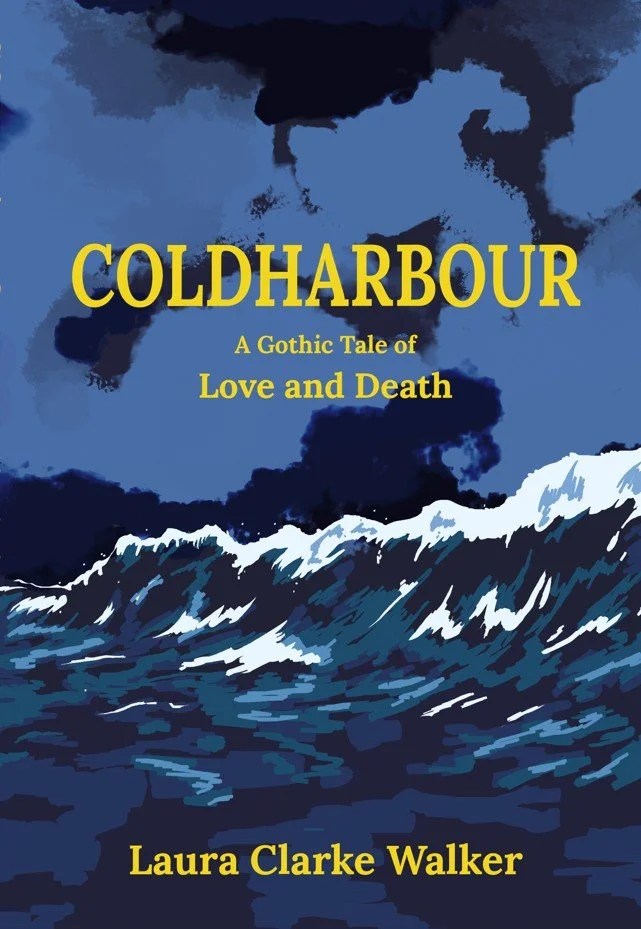
Folks, you’re welcome to swing by Laura Clarke Walker’s website at for more information about her writing and life. Her debut novel, Coldharbour, hits virtual bookstores on January 31st. I hope you check it out!
Nineties nostalgia.
~The Blurb~
Three generations preyed upon by pure evil. Two lost souls drawn to each other in the darkness. One
compelling story of love, loyalty, and betrayal.
Decades of death and deceit come to a head in a desolate Essex seaside town in October 1999.
While everyone else is worrying about the millennium bug, Alex Wilde is staring into a sea she hasn’t seen for a month. She’s finally home and it’s time to resurrect her life: get a job, get somewhere to live that isn’t her uncle’s old haunted house, and get her teenage daughter back.
But Coldharbour is a town of shadows and Power, the hereditary magic running through the veins of the blessed (or cursed) few, including Alex.
When she meets Elizabeth, the intriguing new owner of the run-down café on the promenade, she knows she is no ordinary woman. However, Alex has no idea how dangerous her new acquaintance really is.
Together, they stumble straight into a paranormal murder mystery that even the police can’t solve and, as Alex digs deeper, she starts to unravel the sinister family secrets that have stalked her since she was a child.
Battling demons and burying ghosts, Alex will need all of her Power, courage, and Wilde ingenuity to survive.
Coming up, I’ve got a podcast, some terrific music recommended by Blondie, and my thoughts on writing against the trend. Stay tuned!
Read on, share on, and write on, my friends!
 Jean Lee's World
I do like the ‘The Blurb’ as a word. That said another wonderful blog. All the best to Laura Clarke Walker and you. Regards, Mike
LikeLiked by 1 person
Many thanks, my friend! Stay warm these chilly days…
LikeLike
Laura is a new author to me and I enjoyed meeting her here, Jean. Thank you for showcasing her and her work. What a fascinating interview. I’m not sure I would want to live in a haunted house unless the spirits were loving and friendly. 🙂
LikeLiked by 1 person
I get weirded out by the whole concept–I’d rather live in my car, lol!
LikeLiked by 1 person
Fascinating how Laura used writing to communicate when she was unable to speak. Excellent interview.
LikeLiked by 1 person
I agree, my friend, thank you!
LikeLike
Thanks for posting another interesting interview with an indie author!
LikeLiked by 1 person
I’m glad you enjoy them!
LikeLiked by 1 person
Connecting with readers… I think that would be the greatest payoff of all. Great interview. I enjoyed reading it.
LikeLike
That sounds like a really good book. Well done, Laura! A lovely interview too. Thanks for that, Jean.
LikeLiked by 1 person
Always happy to see you stop by! xxxx
LikeLiked by 1 person
sounds such a great book. I had a college friend who went through a deeply traumatic experience and stopped talking for months. She wrote wonderful little fairy tales to express what she was going through. Xxxxxxx
LikeLiked by 1 person
I hope your friend found healing. xxxxxx
LikeLike