Welcome back, my fellow creatives!
Ever see a B-movie (or C, D, even an F-movie) that was shot for about ten bucks and a grocery gift card? I have. I bet you have, too. The films are shot in people’s houses and backyards. A classroom becomes a police precinct or newspaper office (sort of). The county park becomes another planet or mystical land that seems to be nothing but trees and mulched paths and the occasional trail sign with a board taped over it.

The setting was cheap because the budget required it to be so.
As writers, we don’t have that obstacle. We can create anywhere in an anytime with countless anyplaces we wish. It’s a beautiful, terrible power, one to be wielded wisely.
That’s why I want to recommend a particular resource for any writer, but especially for my fellow genre writers keen to create new lands, planets, or cosmos. When you are in a genre that requires extensive world-building, setting is vital.
Setting involves much more than stringing together a list of adjectives or dumping a chunk of visual clues to orient the reader. It can create the world of your story, show characterization, add conflict, slow or speed up your pacing, add or decrease tension, relate a character’s backstory, thread in emotion, and more.
A Writer’s Guide to Active Setting by Mary Buckham. was a lovely surprise find by Bo at a library book sale. It hurts the heart a little to read a fellow writer’s passionate notes scribbled on its pages for the first few dozen pages, and then end. Damn.
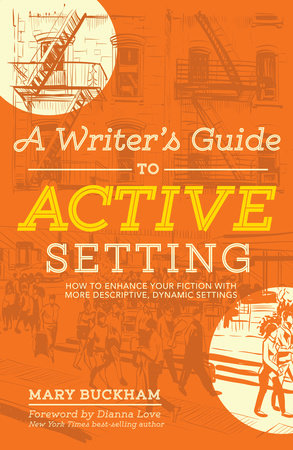
But I love the thorough notes provided by Buckham herself. She dissects literary examples phrase-by-phrase to show how a brief, three-to-four-sentence paragraph can pull off a massive amount of world-building. She breaks down word choice and sentence structure to show why an excerpt works or doesn’t work. Here’s an example so you can see what I mean.
Story Excerpt: As a child, Jean-Baptiste Adamsberg had run around barefoot in the stony foothills of the Pyrenees. He had lived and slept there, and later, after becoming a policeman, he had been obliged to work on murders committed there, murders in the stone-built villages, murders on the rock paths. He knew by heart the sounds of pebbles underfoot and the mountain’s way of gripping and clutching you to its heart like a muscular old man. –Fred Vargas, The Chalk Circle Man
There’s the excerpt. Now, the dissection.
Story Dissection: As a child, Jean-Baptiste Adamsberg had run around barefoot in the stony foothills of the Pyrenees. [Straight telling at this point. The reader is given a basic statement of fact and, unless the reader is familiar with the Pyrenees, this sentence doesn’t pull them deeper into the story. It’s the same as someone introducing a stranger to you and simply stating that they come from a town or area you know little about.] He had lived and slept there, [Small, fresh way of starting to show the reader that this place may have shaped this man. If the author had said only–he lived there–and moved on, there would not be that small emphatic beat that says pay attention, this matters.] and later, after becoming a policeman,
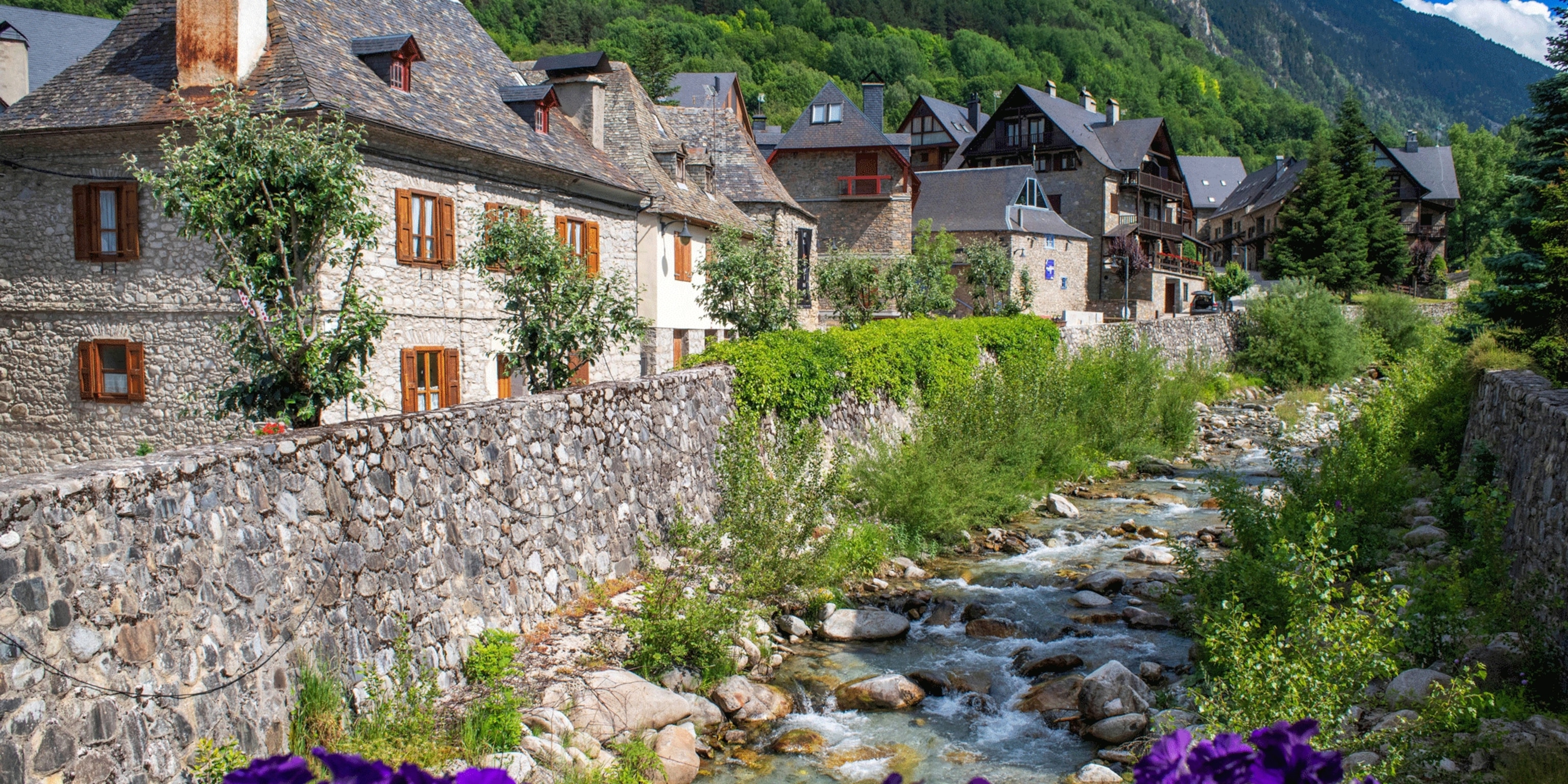
[Another statement of fact.] he had been obliged to work on murders committed there, murders in the stone-built villages, murders on the rock paths. [Here is the double-beat that if eliminated would decrease the imagery of where this man was shaped. The adjectives stone-build and rocky, are deliberately used to build to the next sentence and make the reader wonder about this character who was so shaped by his early environment.] He knew by heart the sounds of pebbles underfoot [Audio detail here that allows the reader to be this character as a child, feel what he felt, which creates a stronger image of the individual via specific Setting details.] and the mountain’s way of gripping and clutching you to its heart like a muscular old man. [This last line is almost poetical and reveals that this man has some depth, thinking of his childhood in this way. So the reader now has a hint of backstory and a stronger sense that this character is still very much a product shaped by this specific Setting.]
Isn’t this breakdown amazing? And these dissections fill the book. Buckham also likes to show how a little setting detail, even one sentence, provides that extra touch of immersion for rising tension, action sequences, plot conflict, the lot. One way she does this is by sharing hypothetical “rough drafts” of the story moment, and the story moment as it’s published. Here’s an example:

Rough Draft: Then she looked at each of us in turn in case we had more questions. We didn’t, so she smiled once more and swept away through the door.
What’s Published: Then she looked at each of us in turn in case we had more questions. We didn’t, so she smiled once more and swept away through the door. It sucked shut behind her and teh ceiling decorations rustled and stilled. Then the reception area went quiet. —Lee Child, The Enemy
As writers, we cannot slow our narrative pacing to a grinding halt just to describe a town square or a character’s childhood room. Setting details must matter without sacrificing momentum. Buckham shows how to deliver rich, vivid world-building through Active Setting without dragging down the story’s pace. Buckham’s work is proof that, whether you’re a believer of plot-driven storytelling or character-driven storytelling, you still prioritize setting if you want readers to not only enjoy your novel, but experience it.
Using Setting in an active way accomplishes double and triple duty. Why waste valuable words to accomplish only one story function? … A great Setting for a story is unique, evocative, and memorable. If the Setting is researched, understood, and then described with skill, it will stay with the reader throughout the length of the story and beyond.
As I work to construct a cosmos, I want to make those stars matter, the eyes matter, the very dust matter. Because these bits and pieces tell a story on their own, don’t they? We see this as we travel through towns big and small: the battered barns. The outdated beer lights in the town bar. The pristine gardens complete with tractor dire planters. There are stories behind those details, and those details help frame stories.
If you want extra insight into making setting work for your story without costing you pacing, I cannot recommend A Writer’s Guide to Active Setting enough. Pick up a copy at your local library or bookshop—your storytelling will thank you!
Coming up, a few more interviews and podcasts, for sure. I’d love to get into some ambience, too, and mayhaps some music. And, sadly, saying goodbye to an old friend.
Until next time: read on, share on, and write on, my friends. Cheers!

 Jean Lee's World
⭐️⭐️⭐️⭐️⭐️
LikeLike