
Welcome back, my fellow creatives! I’m thrilled to continue sharing some lovely indie authors I’ve met in our community–it’s so great to connect with folks again. This month, please welcome the cozy mystery author Camille Sharp!
I think many of us have our favorite mystery authors, but we don’t always agree as to favorites. (My husband has no patience for Agatha Christie, the heathen, lol.) What’s your favorite under-appreciated mystery novel?
I really enjoyed the Cassie Gwynne series by Genevieve Essig. The first one is called A Deception Most Deadly. It’s set in the late 1880’s, in Florida, I think. I found it very funny and immediately read the next two. I do think she tipped her hand too much too soon with the clues in the first book, I guessed the killer pretty early on, but it was still a fun read. I laughed out loud a few times.
Oh, I love a bit of humor in a good mystery! I enjoyed the Midsomer Murders series for that same reason. What first inspired your Maiden Harlow mystery series?
It started soon after my brother died and we headed overseas for his funeral. I remember staring down the prospect of a 30+ hour journey from Australia back to Michigan and thinking that I needed some lighter books to see me through. I didn’t want real life or deep and meaningful, I already had too much of that bombarding me from all sides. So I loaded up a bunch of cozy mysteries and just devoured them.
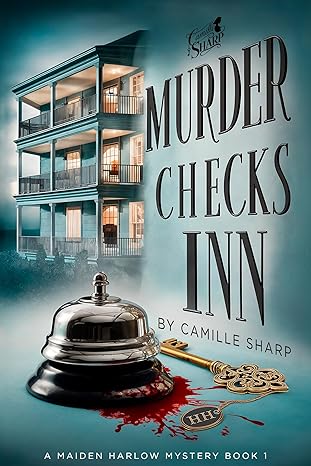
One series I read took place in a bed and breakfast, and I really liked the concept. That behind-the-scenes look at the running of a hotel and the things that went on in people’s lives. So, I started drafting a concept in my head of something warm and family-owned. I pictured an inn, and then I started imagining what a good MFC might be like. I wanted someone that was clever and sexy. Also someone who made silly goofs but didn’t humiliate herself constantly, I cringe when that happens too much in books.
It was a long visit in the States, and there were a lot of unpleasant tasks that my husband and I took on to spare my mother having to do it. I wrote in my head throughout. I refined Maiden’s character and started adding family and friends.
By a few weeks in I knew I was going to make it happen, and I was going to turn it into a series of cozies. It gave me something to really look forward to after such a draining trip.
I am sorry for your loss, but I’m glad you could support your loved ones as you set off on that journey of grief in more ways than one. I, too, have used writing as a way to cope with inner struggles, be they the loss of my father or postpartum depression. Escaping into a story-world definitely helped me find the strength and resolve to get through the trials awaiting in reality. Would you say writing energizes or exhausts you?
Energizes, definitely. I do sometimes get to the end of a long day and know that I’m done, nothing good will come from trying to push any further. By and large though, I will always be writing throughout the day, every day.
I sometimes write while I’m writing, which is as weird and unhelpful as it sounds. The other day I was sitting at my computer working on my soonish to be released romantasy novel when the bones of a plot for another book entirely started forming in my head. So, I stopped the book I’m hoping to publish in the near future to throw down these notes for something that may not see the light of day for ages. But that’s writing, for me at least, when the shadows of an idea are there, you have to grab them or you may never see them again.
Even though it can get chaotic, I love writing and I’ve always done it. Even when I had no plans to publish, I never left writing behind. If stories are in you, you’ll bring them out, one way or another.
That’s powerful encouragement, thank you! Were you inspired by others in your life to write, or did you have a different kind of childhood experience that taught you the power of words?
Fear and guilt were used against me a lot when I was a child, so I naturally rankle at that kind of manipulation now. Certain family members unintentionally taught me that words can tear down and destroy. But I turned to stories to escape, and it was very effective. On the other hand, I remember that my uncle would write poems for people that were struggling, or in honor of family members that had passed away. They were authentic and heartfelt and always tied to a memory that he had of that person. When he died, there was no one to do that for him (I’m no poet). But the things he’d written were still there and they still speak for him. If you write something, or even say something, that really resonates with someone or makes them feel happy, you’ve really achieved something special.
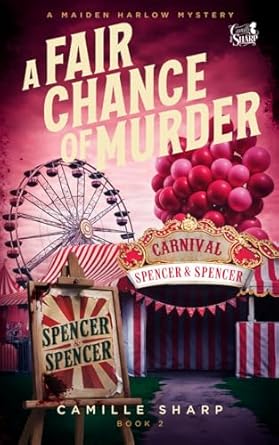
Considering you’re currently four books into your mystery series, you’re achieving that special something, I’d say! Do you want each book in your series to stand on its own, or are you trying to build a body of work with connections between each book?
I’m doing my best to achieve both. If I had to choose, I’d say that I’ve crafted a world, and that world and the people in it are connected.
I try to write deeper, fleshed-out characters. To do that when you’re writing a series of books means that the people and relationships grow as it goes along. It’s best experienced, in my opinion, read in order.
However, to try and look after people that want to pick up a book without committing to a series, I try to keep some key elements self-contained. For instance, I try not to name killers from past books in case someone grabs book 3 or 4 and then decides they want to go back and read the earlier ones too.
How did publishing your first book Murder Checks Inn change your process of writing?
I write with a bit more awareness that other people will be reading my work. Once you actually start putting your heart out there to be scrutinized and potentially stomped on, you do consider your choices more carefully. Getting my first book professionally edited was probably the biggest shaping influence, and I know my subsequent writing has been better for it. I learned what pitfalls to watch out for and what tendencies I have that I need to keep in check. I also learned more about my strengths and how to build on those. The process of publishing has really sharpened me as a writer, but I was willing to be sharpened. You shouldn’t let anyone dictate your voice as an author, but you don’t want to stubbornly reject valid feedback either.
Mysteries require a very careful balance of planting clues and hiding plot twists. How do you balance making demands on the reader with taking care of the reader?
That’s a tricky one. Basically, you have to be tricky. I try to craft situations where multiple people could have done the crime, and then supply enough evidence to give everyone (or at least a few people) a powerful motive, means and opportunity. I think one of the key points is to give multiple suspects a very strong motive.
I know of a book where the killer’s motive was that the victim rented a shop space that she’d wanted, so she launched a murderous vendetta as revenge. For renting a shop. It was too weak and that made the ending tragic in some ways because it was stupid and pointless, that’s not a cozy vibe for me.
And, personally, I don’t always like guessing who did it. I want to be surprised. I want the big twist. You do have to give the reader enough that the killer makes sense, but don’t spoon-feed them. Readers are smart and they want a good puzzle. I read another book recently, from a fairly well-known author, the plot was so obvious that I guessed who the killer was before the murder even took place. I was disappointed to put it mildly.
I know what you mean! Fantasy fiction can have that problem too with tropes and overplayed storylines. I’m currently buried in research to make sure I’m building something unique for readers in my YA series. What kinds of research do you do for your mystery work?
I research as needed. That might be because I write fiction, so I make it up until I hit a wall where real-world facts are needed. I try to keep true and factual, and I double-check a lot of details before putting them in a book. I’ve had to look up everything from carnival rides, to types and effects of poisons and even the average amount of blood in an adult human body. Mystery writing is not for the squeamish!
Writing outside of our experience can also be tricky. What’s the most difficult thing about writing characters from the opposite sex?
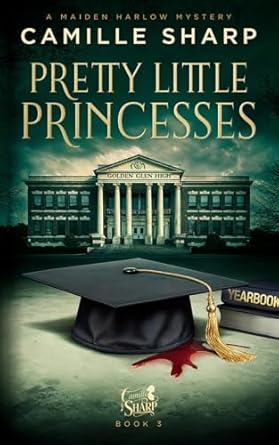
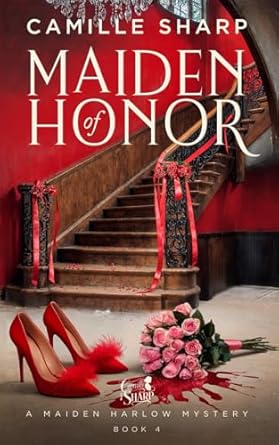
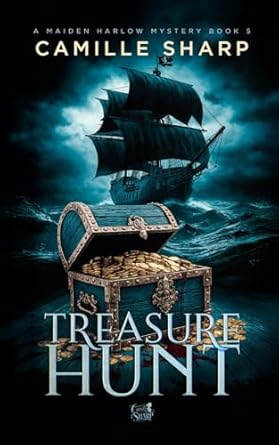
I don’t really find it difficult; I love crawling into a man’s mind. Honestly, I think the key is being observant and learning from the people around you and avoiding obnoxious cliches. That’s a key to writing a good variety of women as well.From family to friends to co-workers, I know and interact with a lot of men. I see the wide variety of personalities, responses and behaviors different individuals show and I try to infuse that into realistic characters.In my Maiden Harlow books I love writing from David’s point of view. He’s very different from Maiden but he isn’t just an irritatingly brash guy that never hears her out. I try to make sure that, especially when they disagree, they both have a good and logical reason for thinking the way they do. There’s a scene in Pretty Little Princesses where another male character, Greg Smith, mentions that, despite all the sexist jokes, teenage guys don’t like being used (for sex, in this instance) and then thrown away like they don’t matter. It was a fairly quick mention but that scene was important to me. Everyone craves respect and dignity, and stereotypes undermine that. So, I try to balance things out when I write from a man’s viewpoint.
How do you select the names of your characters?
When I’m writing contemporary mystery, I grab any name I fancy. When I’m writing fantasy/romantasy/speculative fiction, I make them up. A few people have pulled faces at the name Maiden, but I actually met a family that named their daughter that. It was spelt differently but I thought it was really pretty. For the last name I wanted something timeless and kind of sexy, knowing she’d be called by her last name only for a couple of books. I liked the glamorous sound of Harlow. So, there I found myself with Maiden Harlow and I still love those choices.
Yes! When you find a name that works, you do whatever it takes to keep it. 🙂 Let’s wrap up with one more question for our fellow writers out there: If you could tell your younger writing self anything, what would it be?
I’d tell myself that one day publishing will be far more achievable. You won’t be at the mercy of publishing houses that won’t give your manuscript more consideration than it takes to throw it in the slush pile. One day there will be enough ground for everyone to stand on and you’ll win or lose based on talent and how hard you’re willing to work.
You’ll find a way to share your stories with people that will enjoy them, that’s what matters most when it comes to writing.

Thank you so much for chatting with me, Camille, and congrats again on your series’ latest addition! Folks, feel free to check out her site so you can get on her newsletter AND acquire a free e-book. You’ll love it! 🙂
So, what’s coming up? Well, there should be a podcast in there somewhere. Growing up is hard, especially when you’re Autistic. And how the heck does one manage time, anyway?
Read on, share on, and write on, my friends!

 Jean Lee's World
John le Carré…real name David John Moore Cornwell…was a good one. Whatever, Camille Sharp sounds like a writer to follow. I shall read. What a wonderful ‘blog’ of yours again. All the best, the pair of you. Regards, Mike
LikeLiked by 2 people
And it’s wonderful to see you here, my friend. Hope you and yours are well xxxxxx
LikeLiked by 2 people
Ooh wow, really interesting… more books to read, I’m thinking!
LikeLiked by 2 people
I agree! Hope you’re well, my friend! xxxxxxxx
LikeLiked by 2 people
Wow, what a treasure trove of cozy mysteries. I have not “cozied” up to this genre, but I think it may be time. Good luck to Camille with her career and thanks for this write up, Jean.
LikeLiked by 2 people
And I thank you for reading and sharing, my friend! Hope you’re well xxxxx
LikeLiked by 2 people
Back at you, sister!
LikeLiked by 1 person
xxxx 🙂 xxxx
LikeLiked by 2 people
Added these to my wishlist!
LikeLiked by 2 people
That’s lovely to hear! 🙂
LikeLiked by 2 people
definitely more wonderful books to read xxxx
LikeLiked by 2 people
I agree! 🙂
LikeLiked by 1 person
What a great interview.
LikeLiked by 1 person