
Welcome back, my fellow creatives! I’m thrilled to continue sharing some lovely indie authors I’ve met in our community–it’s so great to connect with folks again. This month, please welcome multi-genre author Beem Weeks!
Let’s start with your reading journey, for we may have visited the same story-worlds in our younger years. What is your favorite childhood book?
The first book I ever checked out of the school library was Where the Wild Things Are by Maurice Sendak. I was in first grade. As first-graders, we were deemed trustworthy enough for weekly trips to the library. I saw that book on the shelf and snatched it up. As a young teen, I read all the S. E. Hinton books. She became an early favorite. The Outsiders is a book I’d read a half-dozen times before the film came out. The film disappointed me.
My kids know The Outsiders well, and they STILL talk about it now and then. I don’t recall them being thrilled with the movie, either. 🙂 What is the first book that made you cry?
That’s a tough one to answer. I remember the first movie that made me cry. That was Bambi. (The scene in question was Bambi’s mother getting whacked early on.) I saw it at a drive-in movie back in 1970 or 1971 (age 3 or 4). I know I hadn’t started school yet. This was back before home video was a thing. Disney used to re-release those old films every five years or so, allowing the next batch of little kids to watch them. As for books, I don’t recall the first to make me cry. However, Barbara Kingsolver’s The Poisonwood Bible made me cry when 5-year-old Ruth is bitten by a snake and dies. It happens so suddenly. The inner turmoil of the mother as she must prepare her youngest child’s body for burial is heart-wrenching. It’s my favorite novel.
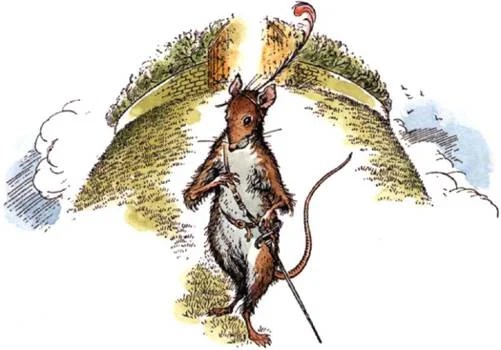
That’s a beautiful example! I remember crying out of terror listening to the read-along storybook for E.T., but that’s because the sound of ET shrieking when the government people show up is nightmare fuel. Book-wise, though, I’d say it’s Reepicheep departing from the Dawn Treader to explore Aslan’s Country. He was hands-down my favorite character in Narnia, and there he went, with joy in his heart, to the undying lands…
Dangit, now I’m sad again.
Okay, let’s chat story stuff now.

I’m in the midst of developing some sci-fi short stories, and it’s KILLING ME that I can’t dive deep into setting and character because there’s no space for that in a short story. You’ve published several short stories, including your latest “The Thing About Kevin,” which packs a lot of family drama that could easily fill a novel. What signs do you look for to help you know if a story’s meant to be a short story or a novel?
I tend to outline most of my stories. During that process, I can determine if a particular story might be told in few words or in many. The number of scenes required to tell the complete story will often play a key role in that decision. I’m working on two novels right now, neither of which could be told as short stories. There are too many underlying factors involved. Character background is important. Clues are needed to make the tale believable to the readers. However, if during the outlining process I can sketch out enough detail to make it feel real, I can comfortably approach it as a short story.
When you look back at your several short stories, which story would you deem as the toughest tale to write?
Probably my short story called “When We Were Kids” from Strange Hwy. It’s about a man coming to terms with the fact that he accidentally caused his younger brother’s death decades earlier. It’s written in the second person POV, which I’ve used a few times. While the story is pure fiction, there’s the undertow of things left unsaid. My little brother died in 2010, and I still haven’t gotten over that loss. There are so many things I wished I would have told him while he was here. He was certainly on my mind while I wrote that one.

I know the concept of “writer’s block” can be a touchy subject. I’m the first to admit I’ve dealt with it: I was at Point A, I could see Point C, but Lord knew what Point B was so I could move forward. What strategies have helped you get out of the plot-fog?
Since I outline most of my stories, I don’t usually fall prey to writer’s block. I know Point A to Point C and everything in between. I map out the breadcrumbs I need to sprinkle as re-direct or as clues that make certain plot lines make sense once I reach the Big Reveal. I do fall prey to a lack of motivation at times. I’ll go for lengthy stretches where I just don’t feel like writing. When that happens, I park my WIP and take a break. Often, I’ll begin mapping out another story. I have a few that are ready to go once my two current Works in Progress reach the finish line.
Sometimes we need a backup creative outlet, I think. I enjoy playing music (other people’s music, to be clear—I’m NOT a composer) and crocheting now and then. If you didn’t write, what would you do for a creative outlet?
Once upon a time, my dream was to become a rock star. I sang lead vocals in a heavy metal band back in the early- to mid-1980s. I made noise with a guitar as well. My career in metal didn’t pan out. However, I still own a couple guitars that I use to make noise. I enjoy it as a means of relaxation. I am a huge music fan. I have a massive CD collection that’s probably 80% metal/hard rock and 20% mixture of pop, jazz, blues, country, and even a little classical. Not necessarily a creative outlet, but it does help me relax and re-focus my attention when needed.
That sounds (literally) awesome! I hope you play for others now and then. Music is one of the greatest gifts we can give ourselves, for there are so many different styles to meet every taste. Like you, my husband Bo has quite an eclectic collection, which is perfect to peruse.
Speaking of sounds, I saw you hosted a podcast for a while! What first inspired you to create the podcast, and did you find it tough to produce? I admit that I keep my podcast as basic as possible, so I don’t drive myself nuts with the production process, lol.
I had hosted a podcast for a book club I’d been involved with for several years. When I left that club, I decided to pursue a podcast where I could promote other writers and creative sorts while building a brand. We produced 250+ episodes over five years. While it takes a lot of work to produce a quality podcast, we had a lot of fun doing it. We did the show live every Wednesday night, so we could take calls from listeners. The interaction with guests and listeners from across the globe made it worth the effort.
That must have been an amazing experience! While I don’t interact with others on mine, I’m glad I spent money on a good microphone—I can dictate story ideas while folding laundry on the other side of the room. 🙂 I know a number of folks will swear by certain kinds of software programs or devices to help them write. I tried Scrivener once but couldn’t quite get into it. What was the best money you ever spent as a writer?
I use a laptop with Microsoft Word and pretty much nothing else. I own a couple of Lenovo laptops that I use for all my writing. As for recording stories ideas, I’m running old school there. I jot ideas on Post-it notes, scraps of paper, and inside notebooks. I have a bunch of ideas that, should I go on a serious writing jag, it will be enough to keep me busy for many years.
It never hurts to have that storehouse of ideas at the ready, to be sure. Is there a specific period of life that you’re drawn to write about more than others?
I write about many different periods of life, from childhood to the elderly, in my short stories. I prefer to write about late childhood and the teenage years as I’m a big fan of coming-of-age stories. Those are some of my favorites, both to read and to write.
Your novel Jazz Baby is a great example of your love for writing about the teenage years. Not only does it feature a teenage girl as a protagonist, but it is also set a hundred years ago. What kinds of research did you work through to get the worldbuilding just right?

My best tool for getting a feel of the 1920s was an old high school American History textbook. It helped me to understand the vibe of the era leading up to the Great Depression. Google fleshed out the rest. It takes a bit of understanding that there are major differences from decade to decade. The world constantly changes in both subtle and profound ways. Another helpful tool was the manuscript of a memoir my grandfather wrote about his life as a teenager in late 1920s Arkansas. He worked on a paddlewheel steamboat that traveled along the Mississippi River. He would unload cargo at various stops along the route. He later went on to become a bootlegger, brewing illegal whiskey up in the Ozark Mountains in Arkansas. He even met Bonnie and Clyde. My grandfather lived an incredible life back then. By the time I came along, he’d given up that life to follow Jesus Christ. It’s important to understand that many of the comforts we may take for granted today weren’t available a hundred years ago. Jazz Baby is set in 1925. I learned the car radio didn’t exist until 1927. And even then, it was just too expensive for most people to have that luxury. Radios became standard in automobiles around 1932. I had to rewrite a scene after this discovery. But the scene became stronger in the rewrite.
What an amazing discovery you can pass down to the next generation (not to mention educational)! I still have a number of my father’s writings I hope to pass to my kids someday.
My WIP features twin teen boys, and it can be challenging at times to get the voice right for a gender that’s not my own. How did you work through this challenge in crafting Jazz Baby?
Emily “Baby” Teegarten, the protagonist from Jazz Baby, is a mix of three girls I knew growing up. Her voice carries elements of my grandmother’s voice, who, like Emily, was born and raised in Mississippi. There’s a cadence to the way they speak down there. I could hear Emily’s voice as I wrote her dialogue, her thoughts, her narration. Understanding the opposite sex really isn’t difficult if you’ve spent time around them. I know the ways girls differ from boys in social settings and in quiet moments. I have a sister. She had friends that were around a lot while we were growing up. It’s about getting into the mindset of that character, regardless of gender.
Thank you for taking time to chat with me today! Let’s end with some words of advice. What’s a common trap for aspiring writers they should avoid?
Believing you don’t need an editor as a second set of eyes is a big one. As writers, we become so intimate with our stories that we miss plot holes or head hopping Points of View. It’s not just about missed punctuation or misspellings. Those are usually the easiest to spot. What we might miss is that scene in Chapter Twelve where Maude and Myrtle take a detour from the main plot because the writer wanted to add a fun day at the beach before diving back in to solve the murder of their Uncle Tobias. I usually have a second set of eyes to catch the needless stuff.
~*~*~
Folks I hope you stop by Beem Weeks’ site to say hello! Coming up, I’ve got another Story Empire highlight, podcast, and of course, another camping trip to share. I admit, I’m a bit torn where to go: another action stomping ground, a comedy glen, or perhaps someplace more musical? We shall see!
Read on, share on, and write on, my friends!


Thank you so much for having me on your blog, Jean Lee! I am honored. I enjoy your questions. They are thought provoking and interesting. I truly appreciate this opportunity.
LikeLiked by 2 people
⭐️⭐️⭐️⭐️⭐️
LikeLiked by 2 people
Thanks, Philip!
LikeLiked by 1 person
Hi Beem and you’re welcome! Wishing you a wonderful Saturday…😊⭐️🎶⭐️😊
LikeLiked by 1 person
This is such a great interview with Beem! I’ve known him for years and did not know about his grandfather’s colorful life. I am a big fan of Beem’s work and have read all of his books to date. I’m anxiously awaiting one of these new novels, Beem. 🙂 Thank you for sharing this, Jean. I loved it!
LikeLiked by 2 people
Thank you for your kind words, Jan. I am so thrilled to be on Jean’s blog. ☺️
LikeLiked by 1 person
This is a great highlight. Beem writes such engaging stories and more people ought to check them out. I was fortunate to be a guest on his podcast a couple of times and he’s a great host.
LikeLiked by 1 person
Thank you so much for your kind words, Craig. I appreciate you.
LikeLiked by 1 person
That was an interesting interview.
LikeLiked by 1 person
Thank you for stopping by, Chris.
LikeLiked by 1 person
Wow, I loved learning more about the two of you! From the loss of a brother to a larger-than-life grandfather, there’s so much I didn’t know about Beem. Many thanks for the interview, Jean 🙂
LikeLiked by 1 person
Thank you for the visit, Nicholas. I appreciate your comment.
LikeLiked by 1 person
I liked that interview, definitely someone I wish I had heard about sooner. xxxx
LikeLiked by 1 person
Thanks for stopping by!
LikeLike