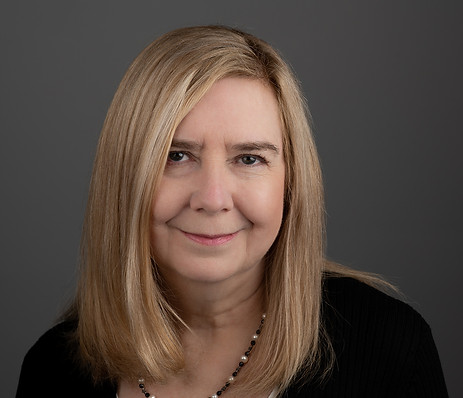
Welcome back, my fellow creatives! I’m thrilled to continue sharing some lovely indie authors I’ve met in our community–it’s so great to connect with folks again. This month, please welcome mystery and suspense author, Joy York!
Let’s begin with your reading journey. What was an early experience where you learned language had power?
It’s not pretty, but seeing terrible things written on the walls. Seeing the looks on the faces of people who were victimized by it. Seeing the gleeful faces of the despicable people who wrote it. Often, children learn it from their parents. They are heartbreaking, indelible marks.
Oh yes. Some words are able to inflict pain more permanent than any physical injury. Words can have another kind of power, though, a power that moves us emotionally. What is the first book that made you cry?
The book that comes to mind that not only moved me to tears, but anger is To Kill A Mockingbird by Harper Lee. Growing up in Alabama in the 1950s, racial injustice was commonplace in so many aspects of our lives. I was fortunate that my parents strongly disagreed with racial inequality and encouraged us to treat everyone equally with dignity and respect. As a young girl, I felt powerless watching it happening around me. Even after all these years, it is emotionally difficult for me to read books with themes of discrimination or racial injustice.
I can understand that feeling! Reading can challenge or entertain, but it shouldn’t hurt. Is this why the American South resonates with you as a storyteller?
I am sure that growing up in the south has influenced much of my writing. Although there are parts of the past that are horrific, there is also a culture of welcoming people with open hearts. And nothing says welcome like a homecooked meal with lots of comfort food and insanely, fat-filled, delicious desserts! Now that I am in Texas, I have a whole southwest culture I can explore.

You write thrilling mysteries both for adults as well as young readers. When you get a story idea, what criteria helps you choose which age group to write for?
My first book, The Bloody Shoe Affair, was inspired by my visits to my cousin Julia in rural Alabama, who was the jailer’s daughter. It was a comfortable place to begin. My vivid memories of the locations and time period, plus my love of mysteries helped the story flow.
I think my biggest criteria would be the emotional maturity of the subject matter. Would it be appropriate for a young adult? Would they have the knowledge to piece together the clues and the mobility required to follow the investigation? How are my characters going to grow from this experience?
Whether you are writing historical mysteries or present-day thrillers, plenty of research is needed to get the bloody details right. What kind of research do you do, and how long do you spend researching before you begin a book?
I am a pantser, so I often don’t know what research I’m going to need until I get there. I start my books with a couple of characters in mind, an idea, and a location that often moves. I keep notes for what I need to research to make sure it is accurate. I use resource books online and verify my sources. A lot of the research comes in the second draft unless it’s necessary for the direction of the story. As in the case of The Bloody Shoe Affair, I remember so much of that time in the 1960s. I always verified my
references to pop culture, fashion, music, etc. to make sure I had the right period.
I was wondering about that! Your Jailer’s Daughter Mysteries are set in the late 60s and early 70s of rural Mississippi. Do you find yourself incorporating historical events and/or figures
into your story to help with the worldbuilding, or do you keep the story isolated
from world events at the time?
I have used historical events, but merely to set the time period or mood. I would rather not have too many distractions from the characters and story development.
On your site, you mention that The Bloody Shoe Affair features teen protagonists based on you and your cousin. You also note plenty of other personalities from your childhood inspired the characters in the novel. What would you say you owe the real people upon whom you base your characters?
Many of the characters are similar to my extended family who were so wonderful and dear to me. They made me feel welcome and loved. They all inspired my writing journey.

Isn’t it wonderful to have such a beautiful support group? I also feel blessed to have a family that supports me in my writing, not to mention all the lovely authors like yourself. x What other authors are you friends with, and how do they help you become a better writer?
Of my gosh! I have met so many wonderful authors from around the world over the past ten years in all genres. The list is so long! When I first started writing, I stayed close to my genre. I thought that is where I would learn the most. Wrong! As I met more authors, I wanted to explore their work and support them. It not only opened a whole new world of books, but I found I learned something from all of them! I can’t name them all, but I will name a few I have been friends with for years:
Beth Haslam and Valarie Poore both write wonderful memoirs that have taken me on amazing adventures that I felt I was apart of. These two women write with passion and authenticity. They are strong, confident, brave, innovative, passionate, and gutsy. They are both my heroes.
Lisette Brodey is a multi-genre writer. Her thrillers are page-turners and usually have a psychological element that keeps you guessing. Sally Cronin is a gem who supports so many writers and artists. She is extremely versatile… from stunning Irish Tales to relatable non-fiction books on nutrition.
John Dolan’s writing is intelligent, witty, edgy, atmospheric, and totally addictive.
Tonya Penrose is a master of cozy mysteries.
Saralyn Richard, D.L Finn, Ivy Logan, Eve Koguce, Katherine Harryman, Joseph Crance, Jan Sikes, D. Wallace Peach, Patricia Furstenberg, K.D McNiven, Sue Coletta,
M.A. Quigley, Kelly Miller…
I could fill up pages of the authors I have become friends with and admire.
Thank you for sharing so many names folks here can explore! We can all learn from fellow writers in our genres.
Writing mysteries can be a bloody grisly business, and I imagine there are times when it becomes emotionally draining—or frustrating! Goodness knows I’ve gotten myself stymied over a plot point and have to take a break from writing until I figure things out. What are your strategies for getting yourself unstuck?
I keep the blood and gore to a minimum. The action scenes can be challenging. Getting everything detailed enough for the reader to visualize the scene. I usually have to rewrite those quite a few times to get it right. I also try to make it a bit unique, something the reader hasn’t read or seen on television a thousand times. Something unexpected.

I have been stuck more times that I like to admit. I had a terrible time with my second book of The Jailer’s Daughters Mysteries. I was stuck for months. I had to leave it and work on something else. I just couldn’t move the story forward. Everything was a dead-end. That’s when it hit me. The fourteen-year-olds in the first book just didn’t have the flexibility and mobility to solve the crime I had challenged them with. Then it hit me… I needed to age them. I made it a year and a half later when they were sixteen. It all fell in
place and the story flowed like a river.
I still struggle with balancing my daily obligations with writing time. What time management tips could you share to help other authors find those crucial minutes to draft?
When I began writing full time, I made a promise to myself that I would treat my writing routine like a job. Right after breakfast, I would go to my office and begin writing. As I learned how vital marketing was, I designated the first an hour or two for social media marketing. If I miss a day for appointments or other important reasons, I try to make it up on the weekend. I don’t have a set goal of wpm. I have found if it is in your daily routine, you are more likely to stay committed. I let my creative flow dictate how long I
write. Sometimes life throws you a curve ball that is so devastating that you are completely derailed. Loss, break-ups, family obligations, life changes… can sometimes make you feel like your creative passion has left you for good. This happened to me last year when I lost my brother. Time and encouragement from friends and family can help you find your way back.

Romantic thrillers are tough to pull off, as one doesn’t want the emotions forced into the narrative for the sake of the genre. In Protective Instinct, how did you find the ability to pace the romance arc with the mystery and action arc so no one out shadows the others?
That’s an interesting question. The personalities of the protagonist were set in my mind. Total opposites in every way. Honestly, I didn’t think a relationship between them was possible. I don’t want “forced proximity” tropes being tagged to my work. I had no expectation in mind for their relationship. If it did develop, I wanted it to be organic. It was more important to me that they both learned and grew from the experiences they were faced with. They surprised me in the end and it was very subtle. I was beginning to think they were just going to be good friends. And that would have been okay with me.
Thanks so much for taking time to chat with me, Joy! Let’s end with a little encouragement. If you could tell your young writer self-anything, what would it be?
Thank you so much for having me, Jean! For advice, I’d say you are not going to get everything right. Learn from your mistakes, correct course, and try again. And Read. Read. Read. It will only make you better, even if you learn what not to do.
Folks, please be sure to stop by Joy’s site or Story Empire to say hello.
Coming up, we’ll get spooky, supernal, and sorrowful. Stay tuned!
Read on, share on, and write on, my friends!


🍁⭐️⭐️⭐️⭐️⭐️🍁
LikeLike